Nairobi’s urban refugee community is facing a silent but devastating threat: digital data privacy violations that expose them to identity theft, financial fraud, and exploitation. In response, Migrant Narratives Africa (MNA) has partnered with the European Union, represented by DW Akademie, to launch the TrustLab Kenya Project – Securing Truth & Strengthening Communities. This six‑month initiative is designed to safeguard refugees’ digital identities, strengthen community resilience, and connect them to legitimate opportunities.
The Problem
Urban refugees in Nairobi, particularly those aged 18–35, often rely on digital platforms to apply for scholarships, jobs, and relocation programs. Unfortunately, many of these platforms are exploited by fraudsters who harvest sensitive data—biometrics, refugee IDs, phone numbers, and email addresses—and repurpose it for criminal gain. Victims lose money through mobile banking scams, suffer identity theft, or find their biometric data misused for purposes far beyond refugee registration.

Research underscores the urgency. A 2024 study by Strathmore University revealed how refugee women in Africa are disproportionately affected by data breaches. In 2025, Ethnic and Migration Studies documented how refugee biometric data in Kenya was repurposed for citizenship determination, highlighting systemic misuse. These violations erode trust in institutions and leave refugees vulnerable at the very moment they are seeking safety and opportunity.
The Project
MNA’s TrustLab Kenya Project proposes three key interventions:
- 24/7 Helpline: A toll‑free service connecting refugees to verified organisations offering pro bono legal services, legitimate relocation programs, scholarships, and employment opportunities.
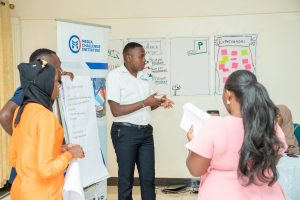
- Training Sessions: Practical workshops on digital data privacy rights under Article 31 of Kenya’s Constitution and the Data Privacy Act of 2019. Fifty urban refugees will be trained in person, while twenty stakeholders—including journalists, CSOs, and NGO staff—will join online sessions.
- Awareness Campaigns: Social media outreach expected to reach at least 5,000 people, raising awareness of data privacy risks and empowering communities to protect themselves.
What This Means for Refugees
For refugees, the project represents a lifeline. It offers immediate protection through the helpline, practical skills through training, and broader awareness through campaigns. By linking refugees to verified organisations, MNA ensures they are not isolated when their data is compromised. The initiative empowers them to reclaim control over their digital identities and reduces the financial losses that have plagued the community.
What This Means for Journalists
Journalists covering migration and refugee issues often face challenges in verifying sources and protecting vulnerable communities. This project equips them with knowledge of data privacy rights and digital security, enabling more responsible reporting. By participating in training sessions, journalists gain tools to safeguard sensitive information, avoid inadvertently exposing refugees to risk, and amplify authentic migrant voices without compromising safety.
What This Means for CSOs
Civil society organisations working with migrants and refugees are frequently targeted by misinformation and fraudulent schemes. The TrustLab Kenya Project strengthens their capacity to protect data, verify opportunities, and support communities. CSOs benefit from training, access to the helpline, and collaboration with stakeholders like the Office of the Data Protection Commissioner, UNHCR, and IOM Kenya. This networked approach enhances accountability and ensures CSOs can deliver services without exposing refugees to exploitation.
Sustainability
Beyond the initial EU funding, MNA plans to sustain the project through advertising revenue on its website, consultancy services through their MNA Media Hub, paid trainings for NGOs and CBOs, and grant applications. This ensures that the helpline, training, and campaigns continue to serve refugees and stakeholders long after the pilot phase.
Broader Implications
As migration increases and digital systems become central to refugee management, the risks of data misuse will only grow. Kenya’s TrustLab project offers a model that can be replicated across Africa, showing how partnerships between media, civil society, and international organisations can deliver practical solutions. For migrants, it represents a shift from vulnerability to empowerment. For journalists and CSOs, it provides tools to report responsibly and support communities. For governments and international organisations, it demonstrates how collaborative action can protect dignity in the digital age.