‘Our analysis shows that the poorer a person’s country of origin, the more likely that their Schengen visitor and tourist visa application will be rejected. African applicants are disproportionately affected, with exceptionally high visa rejection rates,’ the report read in part.
President Hichilema argued that visa application fees, which can be substantial, place an unfair burden on applicants when their requests are denied, often without clear justification. “It is unacceptable that our citizens lose significant sums of money on unsuccessful applications.”
A report by LAGO Collective has revealed that Africans lost nearly $70M to denied visas applications to Europe in 2024.
In total, African countries lost 60 million euros ($67.5 million) in rejected Schengen visa fees in 2024 according to the LAGO Collective analysis.
The London-based research and arts organization has been monitoring data on European short-term visas since 2022 and says Africa is the continent worst affected by the cost of visa rejections.
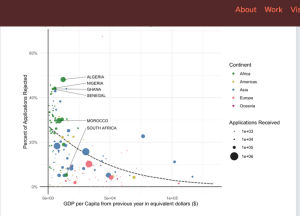
‘Our analysis shows that the poorer a person’s country of origin, the more likely that their Schengen visitor and tourist visa application will be rejected. African applicants are disproportionately affected, with exceptionally high visa rejection rates,’ the report read in part.
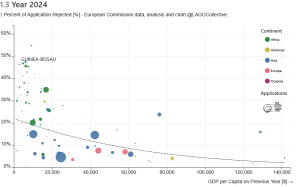
In an Interview with international media, its founder Marta Foresti said, “The poorest countries in the world pay the richest countries in the world money for not getting visas. As in 2023, the poorer the country of application, the higher the rejection rates. African countries are disproportionately affected with rejection rates as high as 40-50% for countries like Ghana, Senegal and Nigeria.” She says this proves “inbuilt discrimination and bias” in the process.
A European Commission spokesperson further added that member states consider visa applications on a case-by-case basis. “Each file is assessed by experienced decision-makers on its own merits, in particular regarding the purpose of stay, sufficient means of subsistence, and the applicants’ will to return to their country of residence after a visit to the EU.”
Africans have long complained about inconsistent, sometimes baffling decisions about who gets approved or denied while applying for European visas.
“The financial cost of rejected visas is just staggering; you can think of them as ‘reverse remittances,’ money flowing from poor to rich countries, which we never hear about,” the LAGO Collective’s Foresti says.
Schengen visa fees increased from 80 to 90 euros in July 2024, making it even more expensive for the world’s poorest applicants.
Africa’s Response
In Zambia, President Hakainde Hichilema has demanded that the European Union (EU) and the United Kingdom (UK) refund fees paid for rejected visa applications. The announcement, made on Friday, 23 May 2025, highlights growing concerns over the high costs and frequent rejections of visa applications, which have impacted many Zambians seeking to travel for tourism, business, or education.

The Zambian government’s stance comes amidst ongoing discussions about global travel equity and the economic challenges faced by citizens of developing nations. President Hichilema argued that visa application fees, which can be substantial, place an unfair burden on applicants when their requests are denied, often without clear justification. “It is unacceptable that our citizens lose significant sums of money on unsuccessful applications,” the President stated, calling for a fairer system that includes refunds for rejected visas.
While specific details on the implementation of this demand remain unclear, the move has sparked significant interest both domestically and internationally. The EU and UK have stringent visa policies for Zambian citizens, requiring applications to be submitted through embassies or online systems, often with no guarantee of approval. According to visa policy information, Zambian citizens face administrative entry restrictions in many countries, with the EU and UK requiring visas prior to travel, unlike some nations eligible for visa-free entry or visas on arrival.
The Zambian Immigration Services note that visa rejections often stem from incomplete documentation or discrepancies in applications, with no formal appeal process for e-visas. President Hichilema’s demand could push for reforms in these processes, potentially easing the financial strain on applicants. The UK, for instance, has a refund policy for certain visa applications, but only if fingerprints and photos have not been submitted, while the EU’s policies vary by member state.
This call for refunds aligns with Zambia’s broader efforts to improve accessibility for its citizens. In 2022, Zambia scrapped visa requirements for citizens of the EU, UK, US, and several other countries to boost tourism, a sector contributing US$1.8 billion to the economy annually. The President’s latest move is seen as part of a reciprocal push for fairer treatment of Zambian travellers.
Public reaction in Zambia has been overwhelmingly positive, with many citizens expressing frustration over the high costs of visa applications. “I paid hundreds of dollars for a UK visa that was rejected without explanation. This demand is long overdue,” said Lusaka-based entrepreneur Grace Mwansa. However, analysts suggest that securing refunds from the EU and UK may face diplomatic and bureaucratic hurdles, given the complexity of international visa agreements.
The Zambian government has yet to outline how it will engage with EU and UK authorities to pursue this demand. Sources indicate that discussions may involve Zambia’s diplomatic missions, including its embassy in the UK, which already assists citizens with travel-related issues. The outcome of this initiative could set a precedent for other African nations advocating for equitable travel policies.
While Schengen visa rejections get the most attention due to the large number of countries, African applicants to the UK complain of similar access challenges.
UK visa fees rose from £100 to £115 in July 2024 ($134 to $154) and then to £127 ($170) in April this year. There was a 13.5% spike in the cost of rejected visas to £50.7 million ($68.8 million) in 2024, the LAGO Collective estimates. Nigerians alone paid an extra £2 million trying to travel to their former colonial master, according to its calculations.
(Zambian Story source- Govima)
(Report on cash lost due to visa rejection source- LAGO Collective)