Seven Kenyan nationals have been arrested in Johannesburg for illegally working at a centre processing refugee applications under a controversial US programme that prioritises white Afrikaners. The move has sparked a fresh diplomatic row between Pretoria and Washington, deepening tensions over President Donald Trump’s claims of “genocide” in South Africa.
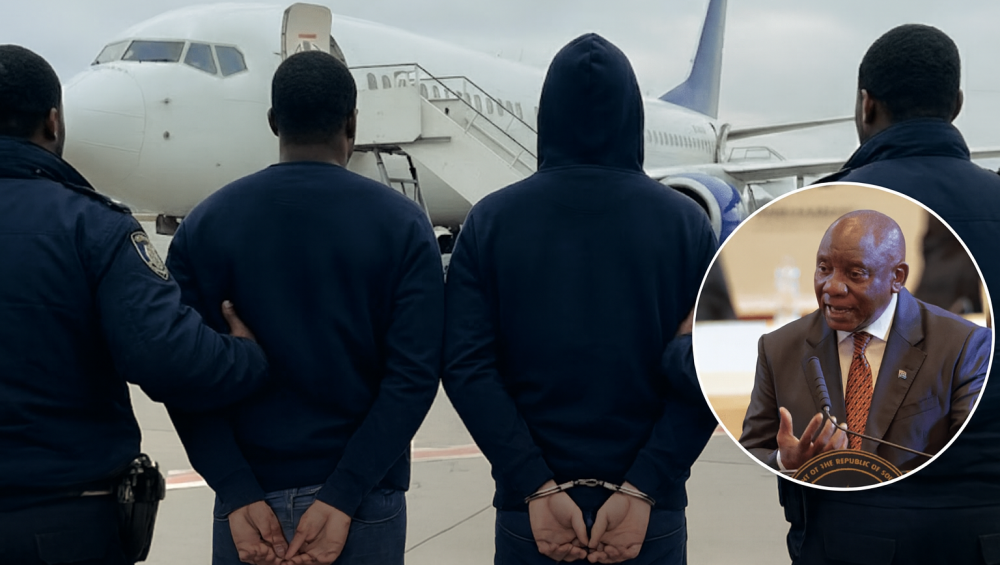
South Africa has ordered the deportation of seven Kenyan nationals accused of working without permits at a refugee processing centre linked to a contentious United States resettlement programme for white Afrikaners.
The arrests, carried out on Tuesday in Johannesburg, followed intelligence reports that the Kenyans had entered on tourist visas but were employed at the centre despite earlier refusals of work visa applications. The Department of Home Affairs confirmed the group will be banned from re‑entering South Africa for five years.
The centre was reportedly operated by Amerikaners, a group led by white South Africans, and RSC Africa, a Kenya‑based refugee support organisation run by Church World Service. These organisations have been handling applications for Trump’s programme, which has already flown small numbers of Afrikaners to the US this year.
The arrests have triggered a diplomatic dispute. The US State Department told CNN that “interfering in our refugee operations is unacceptable” and demanded clarification. American media reported that two US government employees were briefly detained during the raid, though South Africa insists no US officials were arrested.
Pretoria’s Department of International Relations and Cooperation said the presence of foreign officials coordinating with undocumented workers “raises serious questions about intent and diplomatic protocol” and confirmed it had opened formal engagements with both Washington and Nairobi.
The controversy comes against the backdrop of Trump’s executive order launched in February, titled “Addressing Egregious Actions of The Republic of South Africa”. The order cut US aid and prioritised Afrikaner refugees, whom Trump claims face government‑sponsored discrimination. In September, he set a historic low refugee ceiling of 7,500 for 2026, with most slots reserved for white South Africans.
Critics say the programme exposes Trump’s worldview. “If you’re white and you’ve got connections you get in. If you’re not white, forget about it,” said Scott Lucas, professor of US and international politics at University College Dublin’s Clinton Institute, in an earlier interview.
South Africa’s government has strongly rejected Trump’s claims. Foreign Minister Ronald Lamola said there is no evidence of persecution, noting Afrikaners remain among the country’s most economically privileged citizens. Major Afrikaner organisations have also distanced themselves from Trump’s narrative. AfriForum and the Solidarity Movement, representing hundreds of thousands of Afrikaner families, declined the refugee offer, saying emigration would mean “sacrificing their descendants’ cultural identity.” The Afrikaner enclave of Orania added: “Afrikaners do not want to be refugees. We love and are committed to our homeland”.
Relations between Pretoria and Washington have deteriorated sharply throughout 2025. Trump expelled South Africa’s ambassador in March, boycotted Johannesburg’s G20 summit in November, and last month excluded South Africa from the 2026 Miami G20, calling it “not a country worthy of Membership anywhere” in a social media post. Just a day before the arrests, South Africa condemned its exclusion from the G20 as an “affront to multilateralism.”
The arrests of the Kenyan nationals now add another layer to the dispute. For Pretoria, the case is about enforcing immigration law. For Washington, it is about defending a refugee programme that has already been widely criticised as racially selective. And for Nairobi, the deportations raise uncomfortable questions about the role of Kenyan organisations in a scheme that has become a flashpoint in global politics.