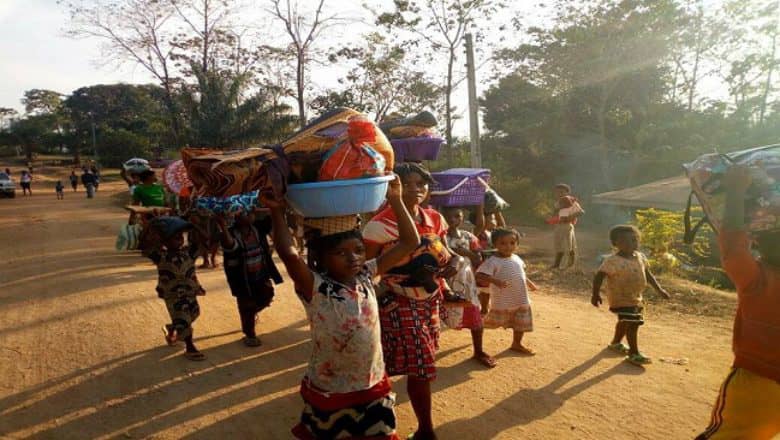
Cameroon is now the world’s most neglected displacement crisis, according to a new report from the Norwegian Refugee Council (NRC). “Decision makers must recognise that displacement isn’t a distant crisis; it’s a shared responsibility which cannot be ignored” – NRC
A new report by the Norwegian Refugee Council (NRC), released two days ago, has once again cast a harsh spotlight on Cameroon’s deepening displacement crisis—ranking it among the world’s most neglected crises for the second year running.
The report paints a grim picture of a country battling on multiple humanitarian fronts. From the violence by armed groups in the Far North to the ongoing separatist conflict in the Anglophone regions of the Northwest and Southwest, more than 1.1 million people have been forced to flee their homes within the country. At the same time, Cameroon hosts over 475,000 refugees, mainly from the Central African Republic and Nigeria, further stretching already scarce resources.
“The world’s attention has drifted,” said a field worker with NRC based in Maroua. “But the people here are still waiting—for shelter, for safety, and for hope.”
IDPs: Trapped Between Violence and Neglect
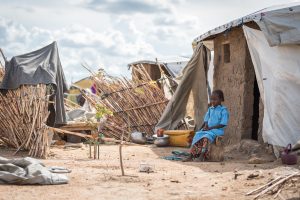
In the Far North region, waves of attacks by Boko Haram and other non-state armed groups have uprooted families from their villages. Many now live in makeshift shelters made of tarpaulin and sticks, often without clean water or functioning health services. In the Anglophone regions, civilians continue to be caught between government forces and armed separatists, with little prospect of return to their homes anytime soon.
Martha, a 37-year-old mother of four from Bamenda, fled to Douala after her husband was killed in crossfire last year. “I was a tailor,” she recalls. “Now I do whatever job I can find. We sleep on the floor in a shared room with three other families. I’ve never felt so invisible.”
According to the NRC, more than 573,000 people are displaced in the Far North, while another 648,000 have fled their homes in the Anglophone regions. Many of them have no documentation, no access to education for their children, and no means of earning a living.
Refugees and a Strained System
While dealing with its internal crises, Cameroon is also hosting hundreds of thousands of refugees from across its borders—particularly from the Central African Republic. Most of these refugees are in the East, Adamawa, and North regions, areas that are themselves facing economic and infrastructural challenges.
Aid agencies say host communities are growing weary. “We share what we have,” says Bernard, a local leader in Meiganga, “but even we have nothing. The wells run dry. There’s no medicine in the clinic. Everyone suffers.”
Refugees often face legal hurdles in accessing services, and many camps are overcrowded and under-resourced. While some families have lived in Cameroon for over a decade, integration remains elusive without stronger government and international support.
Humanitarian Efforts and a Funding Crisis
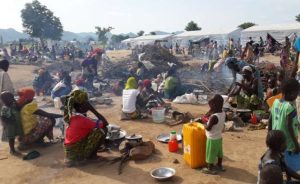
Since 2017, the NRC has been working across Cameroon to provide education, shelter, clean water, legal support, and livelihood assistance. In 2023 alone, they reached over 186,000 people. However, their latest report underscores the reality that these efforts, though impactful, are insufficient.
The 2024 Humanitarian Response Plan for Cameroon remains underfunded by more than 65%, severely hampering the ability of agencies to meet basic needs.
“The lack of attention is not just about media headlines,” said the NRC’s Secretary General, Jan Egeland. “It’s also about politics and the failure of the international community to prioritize lives that are not on their radar.”
Neglect with Consequences
Cameroon’s crisis may not dominate global news feeds, but its consequences are real and escalating. Displaced families continue to fall through the cracks, young people grow up without education or opportunity, and host communities struggle to hold the line.
As the world turns its focus to more visible conflicts, Cameroon is becoming a case study in what happens when suffering is sidelined.
The NRC’s report is not just a statistical summary—it is a call to action. Without renewed attention, funding, and diplomacy, the people caught in Cameroon’s crises will remain unseen, unheard, and unsupported.