According to the International Organization for Migration (IOM), since May 20, at least 1,250 people (250 households) have been displaced from the Gashlack police station, Al-Gadi, and Azama neighborhoods.
Emboldened by external support, allegedly from the United Arab Emirates (UAE), and inspired by their military prowess, the Rapid Support Forces (RSF) captured Wadi Madani city from the army in December last year.
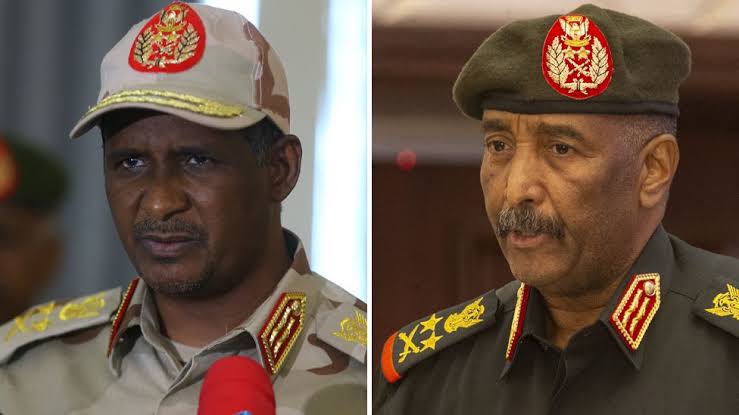
Speculation began to grow about whether the RSF, led by the battle-hardened General Muhammad Hamdan Dagalo and inspired by their recent battlefield successes, would seek to expand their territory and target an even larger city.
Experts warned that it was only a matter of time. It has become a self-fulfilling prophecy: El-Fasher, the capital city of North Darfur, 195 kilometres northeast of Nyala, Sudan, is now in the line of fire. Civilians have been left to pay the ultimate price.
The city has been thrust into a severe humanitarian crisis as clashes between the Sudanese Armed Forces (SAF) and the Rapid Support Forces (RSF) continue to escalate.
Since hostilities began on May 10th, the situation has deteriorated rapidly, with an alarming toll on the civilian population, now estimated at nearly 800,000 individuals, by press time.
The fighting initially broke out in the northern and eastern parts of El-Fasher but has since spread, with significant impacts now being felt in areas previously spared from direct conflict.
Villages to the west of the city have also come under attack, forcing a large number of civilians to flee towards the urban center. These displaced individuals are now sheltering in extremely overcrowded sites throughout the southern neighborhoods of El-Fasher.
According to the International Organization for Migration (IOM), since May 20, at least 1,250 people (250 households) have been displaced from the Gashlack police station, Al-Gadi, and Azama neighborhoods.
These numbers are expected to rise as the conflict persists. The situation on the ground remains tense and unpredictable, with frequent armed clashes adding to the chaos.
The ongoing violence has severely strained medical facilities. Médecins Sans Frontières (MSF) reports that the Al Fasher South Hospital has admitted 700 injured civilians since the clashes began, with 85 fatalities recorded so far.
The hospital is running critically low on medical supplies, with only about ten days’ worth remaining. The need for resupply is urgent, yet the lack of safe passage for humanitarian aid complicates efforts to restock essential medical provisions.
Even before the recent escalation, the conditions in the internally displaced persons (IDP) gathering sites were dire. There is a severe lack of sufficient shelter, hygiene infrastructure, and basic supplies. Humanitarian services and assistance have been significantly constrained due to ongoing access issues.
The expansion of the conflict into the southeastern neighborhoods, coupled with direct shelling in the western and central parts of El-Fasher, indicates a significant broadening of the conflict’s direct impacts on civilians.
Indiscriminate bombing and the increased use of civilian infrastructure for military purposes by both conflicting parties have exacerbated the risks faced by the city’s residents.
Reports from humanitarian partners highlight that basic necessities, including water, are increasingly out of reach for a growing portion of the civilian population due to the ongoing fighting.
Key roads leading out of El-Fasher are either blocked or deemed unsafe because of the presence and activities of armed groups. While some movement is reported on southern routes towards Zamzam, Abu Zeriga, Dar El Salam, and Nyala, those attempting to leave are subjected to screenings and imposition of fees at numerous checkpoints.
The humanitarian access to El-Fasher has been severely limited. Since the start of 2024, only 39 trucks have managed to reach the city via crossline and cross-border routes, carrying health, nutrition, and food supplies intended for an estimated 186,000 people.
Moreover, 1,500 metric tons of non-food items (NFIs) at the Tine crossing point have been awaiting approval for onward movement for three weeks, depriving more than 94,000 people of much-needed assistance.
Additionally, 13 trucks carrying health, nutrition, and NFI supplies for over 121,000 people, dispatched from Port Sudan on April 3, are still en route to El-Fasher due to delays in obtaining clearances at various checkpoints and the recent surge in insecurity.
In response to the escalating crisis, the UN Secretary-General has issued a statement reminding all parties of their obligations under international humanitarian law to protect civilians.
He called on all conflicting parties to facilitate the safe, rapid, and unimpeded movement of the civilian population to safer areas and to allow humanitarian access to all civilians in need across El-Fasher, Darfur, and Sudan as a whole.
The Secretary-General’s appeal underscores the urgency of addressing the immediate humanitarian needs and the importance of ensuring the protection of civilians caught in the conflict.
As the situation remains volatile, the international community’s attention is focused on finding solutions to alleviate the suffering of nearly 800,000 civilians trapped in the city.
The ongoing clashes between the SAF and RSF in El-Fasher have created a humanitarian catastrophe of immense proportions. With medical supplies dwindling, access to basic necessities increasingly constrained, and thousands displaced from their homes, the city’s civilians are in desperate need of relief.
The call for a cessation of hostilities and the facilitation of humanitarian aid is more critical than ever, as the world watches and hopes for a resolution that will end the suffering and restore some measure of safety and stability to El-Fasher.