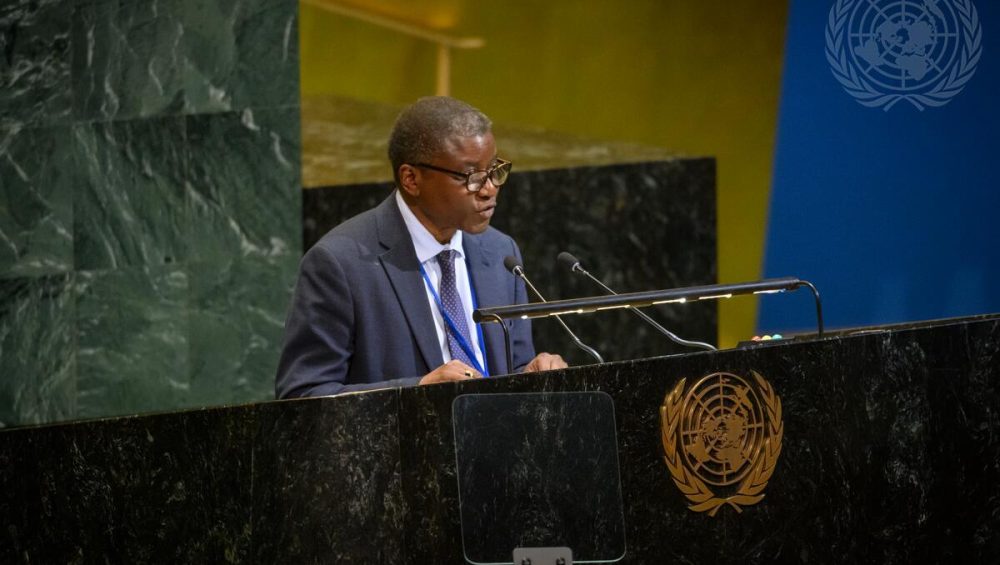
At a press briefing at Serena Hotel in Nairobi, UN Special Adviser on the Prevention of Genocide, Mr. Chaloka Beyani, warned of worsening atrocities in Sudan. Survivors’ testimonies, he said, “shake our conscience,” as civilians face killings, sexual violence, and starvation at the hands of both the Sudan Armed Forces and the Rapid Support Forces.
Sudan’s war has become one of the most devastating crises in the world today. Since April 2023, when fighting broke out between the Sudan Armed Forces (SAF) and the paramilitary Rapid Support Forces (RSF), millions of civilians have been caught in the middle of a brutal conflict. The violence has spread across Darfur, Kordofan, and beyond, leaving families displaced, communities destroyed, and entire regions on the brink of famine.
On 18 December 2025, the United Nations Special Adviser on the Prevention of Genocide, Mr. Chaloka Beyani, addressed journalists at Serena Hotel in Nairobi after a four‑day mission in Kenya. His words were stark and sobering. “I have listened to the stories of those who suffered and escaped the violence. Their testimonies shake our conscience,” he said. Survivors described killings, sexual violence, and forced displacement, painting a picture of a country where civilians are deliberately targeted by both sides of the conflict.
Beyani explained that verified information shows both SAF and RSF, along with allied militias, have committed grave abuses. “Both sides have destroyed medical centers, markets, water and food systems as well as displacement camps. Hospitals and medical facilities are under siege, humanitarian relief is being weaponized, access to aid is denied and humanitarian workers are deliberately targeted,” he told the press.
Atrocities in Darfur
Darfur has long been a flashpoint of violence, but the current war has brought new levels of brutality. In El Fasher, North Darfur, RSF and allied militias carried out mass killings and sexual violence against the Zaghawa, Masalit, and Fur communities. These attacks were often preceded by hate speech and incitement along ethnic lines. Beyani warned that such systematic and ethnically motivated violence could amount to genocide under the 1948 Genocide Convention. “Such acts may fall within the categorization of the crime of genocide,” he said.
Independent investigations support his concerns. Human Rights Watch documented videos showing RSF fighters carrying out extrajudicial killings and rapes against people fleeing El Fasher. Yale University’s Humanitarian Research Lab reported that RSF fighters engaged in a campaign to destroy evidence of mass killings by burying and burning bodiesThe New Arab+1. Survivors told UN experts of door‑to‑door executions, assaults, and widespread looting.
One displaced nurse, Asmaa, described returning to El Fasher to find “only bodies where her neighbours once lived and no sign of the family she had come to save.”
Expanding Violence in Kordofan
The violence is not confined to Darfur. Beyani expressed deep concern about the Kordofan region, where cities are at “a very high risk of atrocity crimes.” His warning echoed that of UN High Commissioner for Human Rights Volker Türk, who earlier said, “We must not allow Kordofan to become another El Fasher”.
Reports confirm that drone strikes in South Kordofan killed more than 100 civilians, including dozens of children. Hospitals have been hit, medical staff injured, and aid convoys blocked. Civilians in Kadugli and Dilling face daily bombardments, while displacement camps are overwhelmed.
The UN Office for the Coordination of Humanitarian Affairs (OCHA) warned in December that escalating violence and sieges in Kordofan are trapping civilians, destroying essential services, and driving famine risks.
Humanitarian Collapse
Sudan’s humanitarian situation is catastrophic. According to UN OCHA, more than 14 million people are displaced internally, while up to four million have fled to neighbouring countries. Aid agencies estimate that 30 million Sudanese people now need assistance, nearly a quarter of the population.
The International Rescue Committee ranked Sudan as the world’s most neglected crisis of 2025. Save the Children’s humanitarian director Abdurahman Sharif said: “Children are living a nightmare in plain sight, yet the world continues to shamefully look away”Al Arabiya English.
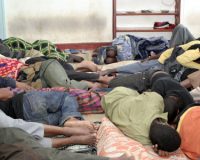
Civilians trek for days to escape violence, often facing extortion or further abuse along the way. Food warehouses are nearly empty, and famine has already tipped two cities into crisis.
Calls for Action
At the Nairobi briefing, Beyani outlined urgent steps to protect civilians. “I call for a ceasefire to prevent further atrocity crimes,” he said. He urged both sides to guarantee unhindered humanitarian access and lifesaving services.
He called for the demilitarization of cities, backed by monitoring mechanisms, to prevent mass killings. He warned against fragmented peace talks, saying: “Multiple peace processes or platforms may only lead to parties playing one against the other in what we call ‘forum shopping’. We require leadership to bring multiple platforms into one platform, and I believe that the African Union can play an important role in this regard.”
Beyani pressed the international community to stop the flow of arms into Sudan, noting that weapons have fueled the conflict and human suffering. He pointed to the UN Security Council arms embargo and the African Union’s “Silencing the Guns” initiative as frameworks that must be enforced.
Accountability and Justice
Accountability was a central theme of Beyani’s remarks. “Victims demand accountability and the end of impunity… impunity leads to further violence. This cycle must be stopped,” he said.
He suggested mechanisms such as a tribunal, hybrid court, or extraordinary chambers under the African Court of Justice. He acknowledged that while the International Criminal Court is investigating some cases in Darfur, its jurisdiction is limited. Broader accountability mechanisms are needed to address the scale of atrocities.
Beyani emphasized that justice must be victim‑centered. “I listened to the voices of the victims and to the civil society – they all demand accountability and the end of impunity for the atrocities committed,” he said.
Survivors’ Voices
Beyond official statements, the human stories are harrowing. In El Fasher, residents described RSF fighters going door‑to‑door, executing men and abducting women. In Kordofan, a drone strike hit a kindergarten, killing dozens of children.
One displaced man told UN News: “We fled with nothing. They took our food, our cattle, even our water. We walked for days. Some died on the road”.
These testimonies underline Beyani’s warning that atrocities are not isolated incidents but part of a systematic campaign.
Regional Dimension
Sudan’s war has destabilized its neighbours. Refugees pour into Chad, South Sudan, and Ethiopia. Arms flow across porous borders, fueling violence. The African Union faces pressure to act, but peace talks remain fragmented.
Earlier in 2025, UN envoy Ramtane Lamamra engaged in shuttle diplomacy to de‑escalate the conflict. Nairobi has become a focal point of Sudan diplomacy, with Beyani’s visit underscoring Kenya’s role as a hub for regional consultations.
Conclusion
The Serena Hotel briefing left no doubt about the scale of Sudan’s crisis. Civilians are trapped between warring factions, facing atrocities that may amount to genocide. Hospitals are bombed, aid is blocked, and ethnic communities are persecuted. Survivors demand justice, and the world cannot look away.
Beyani’s message was clear: without a ceasefire, humanitarian access, and accountability, Sudan risks sliding deeper into mass violence. “We require a credible and inclusive peace process… we need a victim‑centered approach… impunity leads to further violence. This cycle must be stopped,” he said.
Sudan’s civilians are living through a nightmare. From Darfur’s mass graves to Kordofan’s drone strikes, the evidence is overwhelming. Both SAF and RSF have committed grave crimes. The challenge now is whether the international community will act.
END
Below is a UN Video shared to reporters by Mr. Beyani.