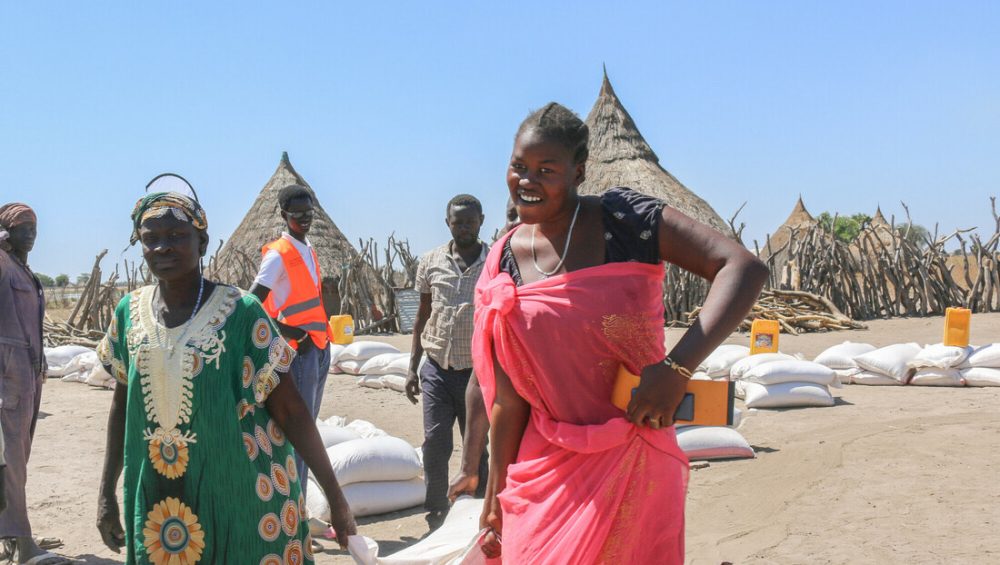
Conflict in neighboring Sudan has displaced over 692,000 people into South Sudan, hyperinflation is crippling the economy, and climate change is wreaking havoc- CARE.
A storm of humanitarian crises is pushing South Sudan to the brink of starvation, with millions of lives and livelihoods at immediate risk, according to Care, a humanitarian aid organization.
Conflict in neighboring Sudan has displaced over 692,000 people into South Sudan, hyperinflation is crippling the economy, and climate change is wreaking havoc.
Photo Coutresy/ CARE
Meanwhile, the humanitarian aid fund is only 16% funded, leaving aid agencies forced to cut vital services like food, healthcare, and sanitation. “The humanitarian situation in South Sudan is getting worse every day,” said Abel Whande, CARE in South Sudan Country Director. “We are particularly concerned about the condition of women, girls, and children arriving at transit centers… Many have trekked for days in extreme temperatures and when they arrive, there’s little food for them.”
Nadia, a Sudanese refugee, shared her harrowing journey: “It took us three months to reach Renk, relying on the kindness of strangers… We often had nothing to eat, sleeping most nights on an empty stomach.”
Aid agencies are urging the international community to act swiftly to address the crisis.
“We must not turn a blind eye to their situation,” said Angelina Nyajima, CEO of Hope Restoration. “Urgent action is needed to address their needs.”
The situation is dire, with 46% of South Sudan’s population, approximately 5.83 million people, facing a worsening hunger situation.
Reports indicate that 1.7 million children could face malnutrition in 2024.
The influx of refugees and returnees has put a strain on already limited resources, exacerbating the humanitarian crisis.
CARE, alongside local organizations, works to support communities, refugees, and returnees. However, the situation is overwhelming, and aid agencies are struggling to keep up with the demand. “The influx of refugees and returnees while communities already are facing severe conditions worsens an already bad humanitarian situation,” said Angelina Nyajima. “People are already living on reduced food rations, high malnutrition, and a lack of adequate health care.
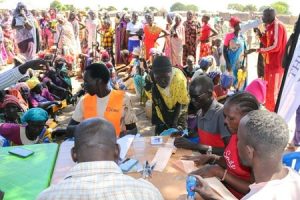
Photo Coutresy/ CARE
The impending floods will worsen Unity State’s already high water levels, potentially causing catastrophic consequences.” To avert catastrophe, increased funding for the humanitarian response is paramount.
Support must extend to host communities, who are generously sharing their limited resources with displaced families. Long-term solutions, like investments in infrastructure, agriculture, and education, are crucial to break the cycle of poverty and vulnerability that fuels conflict.
Addressing the root causes of conflict is essential to prevent further displacement and instability, bringing lasting peace to the region. Only through a multi-pronged approach can we ensure a brighter future for South Sudan.
The international community must act swiftly to address this crisis, providing resources to prepare for the impact of climate change in South Sudan.
ABOUT CARE
CARE has been active in South Sudan since 1970, expanding in 2005 after the Comprehensive Peace Agreement and establishing operations in Jonglei and Upper Nile states. With the country’s independence in 2011, they set up their Country Office in Juba and have since adapted to local needs, addressing humanitarian crises and delivering development programs across several states.
Their focus on gender-based violence includes a strong network of women’s rights organizations. They manage 57 health facilities and 8 mobile clinics in Jonglei, Unity, and Western Bahr El Ghazal, delivering the South Sudan Basic Package of Health and Nutrition Services (BPHNS) even in remote areas.
Their agricultural programs enhance food availability, agronomic practices, and environmental protection, positioning us to expand and support local actors. – CARE South Sudan’s integrated projects address health, nutrition, food security, economic justice, education, peacebuilding, and gender equality.
They provide access to healthcare, sexual and reproductive health and rights (SRHR), nutrition services, and emergency health outreach programs, supporting the diverse needs of women, men, girls, and boys across the region.