During the 2007–2008 post-election crisis, while violence was most intense in the Rift Valley and Nairobi, North Eastern and Upper Eastern Kenya experienced displacement as non-Kenyan Somalis and minority groups were scapegoated and moved out. Up to 600,000 Kenyans were displaced nationwide, many within border counties (estimates range 180,000–700,000)- Upper Eastern Leaders do not wish to get back here.
Upper Eastern Kenya leaders are calling for peace and restraint following the impeachment crisis in Isiolo, warning that the region cannot afford a return to the political turmoil and displacements that have haunted its past.
This comes at a time when tensions continue to mount in Isiolo County where political instability is threatening to spill over into neighbouring counties, prompting leaders from across Upper Eastern Kenya to issue a united call for peace, warning that past cycles of politically instigated displacement must not be repeated.

The current flashpoint is an impeachment motion against Governor Abdi Ibrahim Hassan Guyo, initiated by Sericho MCA Abubakar Godana, supported by 16 out of 18 members of the County Assembly. The motion, dated June 9, 2025, accused Guyo of violations including mismanagement of KSh 30 million in bursary funds, exceeding staffing limits with 36 advisors and 31 chief officers, and making divisive statements about local senators and clans.
Despite a June 25 High Court ruling in Meru that imposed a conservatory order forbidding any debate on the motion, the Assembly proceeded to impeach the governor on June 26—defying judicial directive. The court later declared the entire process null and void, warning of contempt if officials continued in defiance.
The motion landed in the Senate, which convened a special plenary sitting instead of forming a committee. On July 8–9, amid a two-day hearing, Guyo denied all charges—gross violation of the Constitution, abuse of office, and gross misconduct—pleading not guilty to each in front of senators ([turn0search0][turn0search4][turn0search9]). The Senate ultimately upheld his preliminary objections due to procedural irregularities—invalid sittings, forged documentation, and failure to follow Standing Orders—dismissing the motion with a vote of 31 to 12.
Senate Speaker Amason Kingi cautioned that victory should not be misread: “This is not a win… it’s merely a postponement,” he said, calling for reconciliation between the governor, MCAs, and other county leaders.
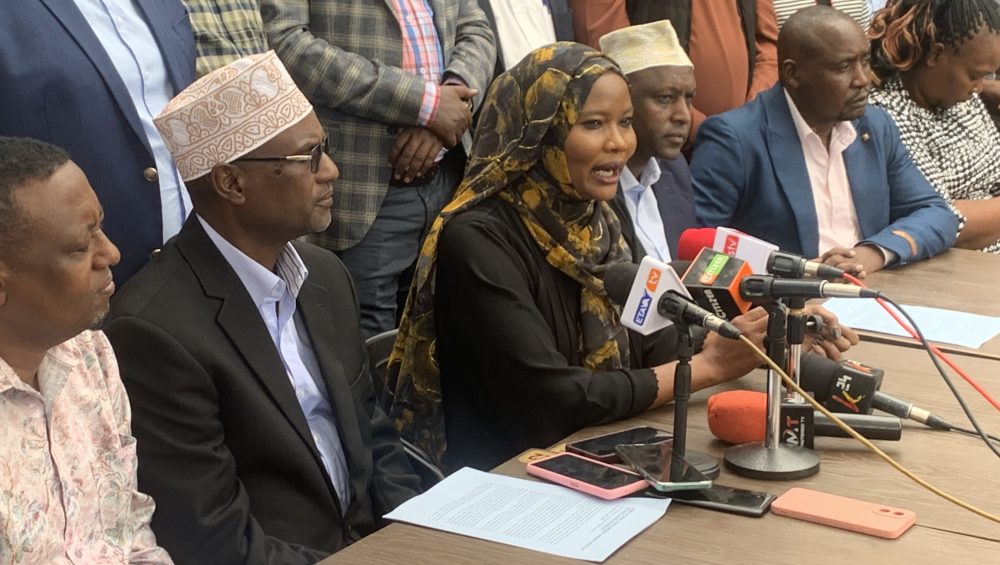
Following the Senate’s decision, former Isiolo Governor Godana Doyo and Woman Representative Mumina Bonaya read a joint statement on behalf of regional leaders, urging healing and unity. They warned that the political cyclone threatened to reignite patterns of displacement familiar to many Northern Kenyans.
History of Political Displacement in the Margins
Political fault lines in Garissa, Wajir, Mandera, and Isiolo have long translated into movement—not for betterment but for survival.
In the 1960s, Kenyan security forces brutally suppressed the ethnic Somali population during the Shifta War, including the Isiolo Massacre where over 2,700 civilians were killed and many forcibly moved into detention camps known as “manyattas”.
Decades later, smaller scale but no less traumatic displacements continued.
In 2012–2013, devolution-linked tension between Borana and Turkana in Isiolo triggered fear-driven migration. Families from wards like Merti and Garbatulla reportedly moved towards Meru or Laikipia to avoid becoming targets in ethnically charged job and land disputes.
In 2014, post-election tensions along the Garissa–Tana River border sparked waves of informal displacement. Aid reports indicate that clan-based political manoeuvres in Garissa and Mandera pushed traders and pastoralists into temporary relocation inside Kenya and across the Somalia border.
During the 2007–2008 post-election crisis, while violence was most intense in the Rift Valley and Nairobi, North Eastern Kenya experienced displacement as non-Kenyan Somalis and minority groups were scapegoated and moved out. Up to 600,000 Kenyans were displaced nationwide, many within border counties (estimates range 180,000–700,000).
Political manipulation of power—especially when leaders weaponize ethnicity and governance—is consistently behind these movements. What happened with Governor Guyo may not have displaced civilians directly. But the forced removal or relocation of MCAs—being moved to Nakuru and Machakos for five weeks—mirrors this pattern of political displacement where officials, like constituents, are cut off from communities.
Why It Matters to Migrant Narratives Africa
MNA’s focus is not merely on movement—but also on why people move. In Isiolo in 2025, political maneuvering caused not only institutional instability but also disrupted governance and the emotional security of both politicians and voters.
Governance that threatens livelihoods—even without voter flight—is a form of internal displacement. In a region already vulnerable to migration pressures due to droughts, seasonal mobility, and informal work, politicized instability means fewer people have safe space to live, voice, or participate.
As the 2027 elections approach, campaign violence, patronage politics, and procedural lawlessness can easily trigger further movement or silent exclusion—especially among women, youth, migrants, and minority clans.
Voices from the Ground
Former Governor Godana Doyo, speaking during the joint statement read in Isiolo, reflected:

“This is not the first time Isiolo has faced such turbulence, but if we do not act now, we risk plunging our people back into the cycles of displacement, fear, and broken livelihoods.”
Woman Representative Mumina Bonaya called for healing across ethnic and political divides:
“We must move forward as one people.”

Concluding Reflection
From the 1960s Shifta War to the recent impeachment showdown, Northern and Upper Eastern Kenya’s chronicle is one of political instability spilling into human dislocation—whether overt or symbolic.
The attempted removal—and survival—of Governor Guyo underlines both the fragility and resilience of devolved governance. It is a reminder that institutions must adhere not only to law but to public trust.
For MNA readers, these events are more than local politics—they are reflections of a governance culture that still subjects marginalized communities to displacement, silence, and exclusion. Whether through courts, senates, or civic pressure, these regions need leaders who hold peace and inclusion over expedience and division.