Despite East Africa’s pledge of free movement under the EAC, or the talks of the African Continental Free Trade Area, small scale traders — many of them women — face daily harassment, arbitrary fees, and systemic corruption at border points. Their testimonies reveal how bribes and bureaucratic delays inflate costs, erode livelihoods, and undermine regional integration.
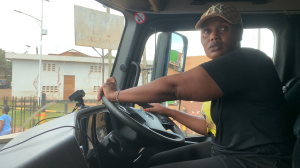
Joan Cheptoo had already been on the road for hours when she joined the long queue of trucks snaking toward the Malaba border. By the second day, she was exhausted. By the third, she was angry. “Sometimes we spend upto three days on the queue. It’s more exhausting than driving,” she said. When the delays became unbearable, she rerouted through Busia — only to be stopped almost immediately by officers demanding bribes for “inspections” she knew were fabricated.
Photo/Kevin Githuku
Her experience is not unique. It is the daily reality of thousands of traders, drivers, and small business owners who move goods across East Africa’s borders. And despite the region’s promises of free movement under the East African Community (EAC) and the ambitions of the African Continental Free Trade Area (AfCFTA), the lived experience at border points tells a different story — one defined by harassment, arbitrary fees, and systemic corruption.
The scale of the problem is staggering. Transparency International estimates that 75 million people in Sub-Saharan Africa paid bribes in the past year, with police and customs officials consistently ranked among the most corrupt. The East African Business Council reports that non-tariff barriers add up to 40 percent to trade costs, undermining competitiveness and discouraging small traders. These numbers set the stage. The testimonies reveal the human cost.
The Daily Reality: Harassment, Delays, and Arbitrary Charges
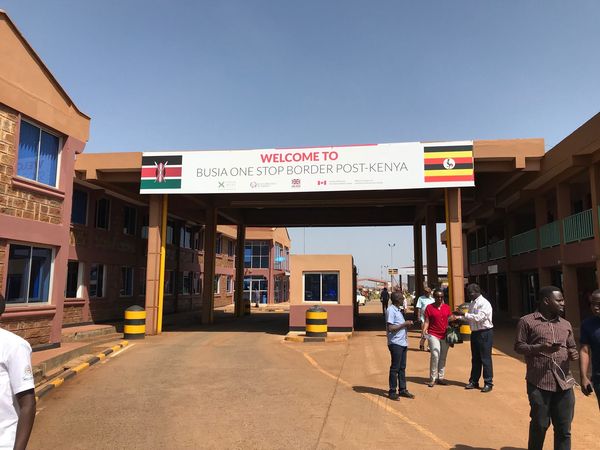
At Busia, Kenya’s busiest border with Uganda, the contradictions are stark. Women carrying sacks of maize and others, second-hand clothes line up at customs, hoping to pass quickly. Officially, the EAC guarantees them smooth passage. In practice, many whisper about “fees” demanded by officers or impostors posing as county officials. Not the legal taxation they are expected to pay. Just ‘fees’ they don’t understand.
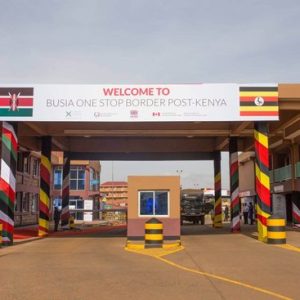
One sportswear trader described how fake officials with badges extorted her, only for genuine county officers to arrive later and demand more. The result was double taxation, confusion, and a sense of helplessness.
Truck drivers face similar ordeals. Cheptoo explained how officers near weighbridges or just past the border routinely stop drivers under the guise of document inspections. “In terms of bribes, KRA has their legal mechanism of collecting revenue, just like URA on the other side, (Uganda). The problem is officers sometimes near weigh bridges, or those that stop us immediately after we cross border points in the name of inspecting legal documents. Those are the problem,” she said.
She did not want to reveal further details of how exactly this is done since she is actively crossing the border points and was concerned for her security, but she did mention subtly that she has had to part with payments she did not fully understand, on several occasions.
These practices inflate costs and discourage efficiency.
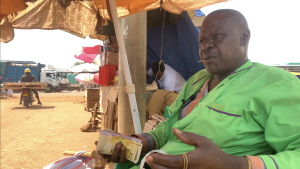
Samson Otondi, a forex agent in Busia, lamented how unstable exchange rates and unfair taxation policies have eroded his margins. “On the side of business, we try our best. The problem is the economy and cost of living. My God just protects me and I thank God for Gen Z for standing up for their rights during the 2024 economic protests. There has always been taxation problems here, and it could have been worse was it not for that protest,” he said.
Photo/ Kevin Githuku
He further revealed that Kenya Revenue Authority does not directly question their modes of operation, however there are always cartels disguising as KRA officials. “You may never know them. Some pretend to be county council officials and others KRA, but we are now very careful to make sure nobody collects from us what they shouldn’t be collecting,” he concluded.
Trader Complicity: A Survival Tactic Born of Desperation
While many traders are victims, some also adapt in ways that blur the lines.
Maureen Achieng, a clothes and textile trader, admitted to selling new clothes to customers who would remove all labels and packaging that would suggest them being new, further disguising those new goods as second-hand to avoid duties. She explains that this tactic “reduces harassment,” but in all sense reflects a broader culture of tax evasion born of desperation.
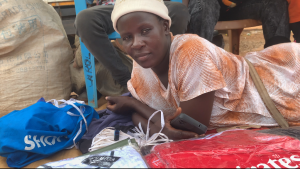
Her story complicates the narrative: corruption is not simply officials versus innocent traders. It is a system that pushes everyone toward informal workarounds.
A Hidden Criminal Economy: The Rise of Fake Officials
What traders describe is not petty corruption — it is an organized ecosystem of impostors operating across East Africa’s borders.
Multiple sources independently described fake officers wearing badges, reflector jackets, or county uniforms. They stop traders in corridors, on access roads, or near customs offices, demanding paperwork they know the traders don’t have.
At Mutukula, on the Tanzania–Uganda border, lawyer and businessman Omary Johansen said the problem is so entrenched that even experienced travelers struggle to distinguish real officers from fraudsters.

“I have been ordering for some goods either for personal use or business in both Kenya and Uganda to Tanzania, and even travelled with some. I have personally faced harassment as an end user, where authorities perceived them as business products,” he said.
He specifically recounted being questioned for carrying multiple phones. “They (revenue officers), asked me why I was having three phones, and in other occasions two. And I had to explain that these, as much as they looked new, were for personal use and I was not bringing them into Tanzania with the intention of selling, or other businesses,” Omary explained.
As a lawyer, he has seen the darker side of this ecosystem. “There has been a major problem where some criminals dress up like government agents of the country you are visiting, and sometimes as a trader or traveler, sometimes you may not tell the difference. They stop you in corridors and ask for paperwork that they know you do not have, then attempt to defraud you.
Some have been arrested, but a lot of times, some get away with defrauding people,” he added.
He also explained how some government officials entrusted with border patrol collaborate with the defrauders at border points to take from unsuspecting traders and travelers.
Further west, the pattern repeats.
In Rwanda, dairy trader Elisha Mukunzi recounted how bus operators demanded cash payments under the guise of ensuring smooth passage, yet he still faced border taxes and repeated police stops.
Mukunzi tells Migrant Narratives Africa that he was harassed twice aboard a Kigali–Kampala– Nairobi bound bus.
In one incident, “The bus guys asked for money to pay in advance so that we don’t waste a lot of time at the border as I move to the customs office. I was surprised to be pulled out by the customs officers. The bus operators had not cleared initially, but they later went and sorted the issues,” he said.
In a second incident, his bus headed to Nakuru, Kenya from Kampala, carrying cheese and butter products he had already cleared, was stopped by regular police. “Along the way, in the highway, police stopped us and said the products were not cleared for. That’s when they started the quarreling,” he added.
While the traders trading within the East African space appear to be hit the hardest, traders importing their goods from outside the continent are not spared either.
Peter Mwangi, the CEO of Elegant Peter Fashions Busia, who imports his products from China directly to Kenya and trades at Busia border, selling large scale to both Kenyan and Ugandan users and traders decries challenges like unstable exchange rates and over-taxation, among others as he explains on the video below;
These testimonies show a regional pattern: impostors, collusion, and inconsistent enforcement that exploit traders from Rwanda to Tanzania.
Women Bear the Heaviest Burden
Women account for 70 percent of informal cross-border traders, according to UNCTAD. A 2023 African Development Bank study found they are disproportionately targeted for extortion and harassment.
Nelly Akoth, a trader at the border who sells clothes and other market products, decried how local Kenyan authorities harass her and her fellow traders. She said she is not only tired of paying fees she does not fully understand, but also exhausted by the ever-changing modes of making payments.
For many women, the choice is between paying unofficial fees or risking detention and confiscation of goods.
Officials Deny the Problem
Officials often paint a different picture.
At Busia, a manager in charge of operations at the Kenya Revenue Authority, who identified himself by only one name Mr. Omar, insisted that computerized systems make bribery “nearly impossible.”
“We have digitized everything. Allegations of corruption in this border post are not true. It is technically impossible to take any cash outside of the organized computerized systems,” he said.
In Nairobi, Lydia Otieno from KRA’s Customs and Border Patrol Division, in an exclusive interview with Migrant Narratives Africa, acknowledged challenges but emphasized reforms in digital clearance.
“KRA’s roles, among others, includes tax collection and enforcement, sometimes tax incentives and exemptions for local and foreign traders at all border posts and in the country. We have legal earmarking that ensures that the taxes are collected and channeled rightfully according to the law, to the various accounts and programs as guided by the national government,” Lydia said. She further added “The best approach has been policies that help create a strong incentive to make sure that those who qualify, get them. At the border, we have strong joint patrols, and even at other import points to make sure no one gets away. We also make sure no corruption happens. We keep records digitally, but if the truck drivers and other traders feel mistreated, they can always reach out to us and report anonymously so that we can be able to assist them.” She noted.
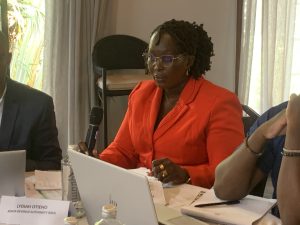
The disconnect between official narratives and traders’ lived experiences is glaring.
A Regional Pattern of Exploitation
Across borders, the stories echo each other:
- Busia & Malaba (Kenya–Uganda): delays, bribes, impostors, fabricated infractions
- Mutukula (Tanzania–Uganda): misapplied taxation laws, fake officers, harassment of travelers like Omary
- Kampala–Nairobi route (Uganda–Kenya): bus operators demanding unofficial payments, customs inconsistencies, police harassment — as experienced by Mukunzi
- Namanga (Kenya–Tanzania): multiple checkpoints and arbitrary fees
- Rusumo (Rwanda–Tanzania): inconsistent enforcement leaving small traders vulnerable
Economists warn that these practices undermine regional integration. Deloitte’s 2025 East Africa Economic Outlook projects regional GDP growth at 5.7 percent but cautions that non-tariff barriers and corruption erode gains. TradeMark Africa’s 2023 study found NTBs reduce intra-EAC trade volumes by up to 25 percent.
What Needs to Happen — Now
Based on interviews and available data, Migrant Narratives Africa proposes three immediate steps that could make a tangible difference: The proposals are after the findings and have been validated by regional experts on the matter.
1. Crack Down on Impostors Through Joint Security Operations
National police, border patrol units, and county governments should conduct coordinated sweeps targeting fake officers, publish arrest data, and establish visible verification systems for legitimate officials.
2. Fast-Track Digital Clearance and Reduce Human Contact Points
The EAC Secretariat and national revenue authorities should expand digital clearance systems, automate more checkpoints, and reduce discretionary interactions where bribery thrives.
3. Establish Independent Border Oversight Committees
Civil society groups, women’s trader associations, and private-sector representatives should be included in oversight bodies that monitor corruption, report abuses, and track NTB reductions.
Cross-border trade sustains millions in East Africa. It is the backbone of livelihoods, the engine of regional commerce, and a symbol of integration. Yet until corruption is addressed, the story of East Africa’s borders will remain one of promises betrayed — where traders pay bribes instead of benefiting from integration, and where the dream of free movement is undermined by everyday exploitation.
END
This investigation was produced in partnership with Africa Uncensored and supported through the Next Frontier of Investigative Journalism project by the National Endowment for Democracy (NED).