East Africa’s private sector is warning that the Ebola outbreak must not be allowed to paralyze trade. The East African Business Council (EABC) has urged governments to coordinate health measures across borders, while health ministers and international agencies stress that reactive closures could worsen risks by driving movement underground.
The East African Business Council (EABC) has urged governments, border agencies, and businesses to remain calm and coordinated in their response to the latest Ebola outbreak in the Democratic Republic of Congo and confirmed cases in Uganda. Kenya has stepped up screening at airports and land borders, with Health CS Aden Duale warning that porous crossings and high mobility demand vigilance.
EABC Executive Director Ahmed Farah stressed that while the outbreak is a serious public health concern, it must not be used to justify unnecessary trade barriers. “Protect public health and keep trade moving safely,” he said, warning that knee‑jerk restrictions could cripple supply chains, undermine investor confidence, and deal a heavy blow to tourism. The council is calling for harmonized screening protocols across airports, seaports, and land crossings, urging governments to avoid duplicated procedures that could become non‑tariff barriers.
Regional health ministers have already activated mobile laboratories and strengthened surveillance under the East African Community framework. The World Health Organization has echoed EABC’s concerns, noting that blanket border closures often push movement into informal routes where health checks are absent, increasing transmission risks. Businesses are being advised to prepare for proportionate screening, health declarations, and possible delays, but not to panic.
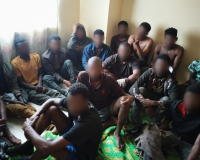
For migrants and displaced families, the outbreak is more than a health emergency—it is a crisis of mobility and survival. In Ituri Province of the DRC, conflict has already uprooted nearly a million people, many of whom now face heightened surveillance and restricted movement. Uganda has confirmed cross‑border transmission, and rapid response teams are isolating contacts in border districts. Kenya has mapped high‑risk counties like Busia and Malaba, intensifying screening of truck drivers and travellers.
Humanitarian agencies warn that restrictions can trap families in conflict zones or push them into unmonitored crossings, where both disease and exploitation thrive. Past outbreaks have shown that migrants are often the first to suffer when health emergencies collide with border controls. The International Rescue Committee notes that fragile health systems in eastern DRC, compounded by aid cuts, leave displaced populations dangerously exposed.
The way forward lies in balancing public health with human security. Regional bodies are calling for stronger cross‑border coordination, community engagement, and investment in preparedness. Transparent communication can reduce stigma, while mapping mobility patterns ensures that migrants remain visible to health systems rather than forced into the shadows.