According to the United Nations refugee agency (UNHCR), approximately 36,000 people initially crossed into Kenya from Ethiopia following clashes around Moyale, with women and children making up a significant proportion of those arriving. The agency warned that urgent humanitarian needs include food, safe drinking water, shelter, sanitation and healthcare.
Thousands of people have fled across the Ethiopia-Kenya border in one of the region’s largest recent displacement crises, as violence centred around the border town of Moyale forces families to abandon their homes in search of safety.
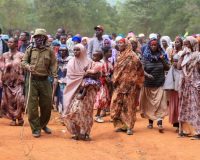
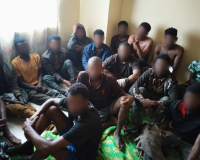
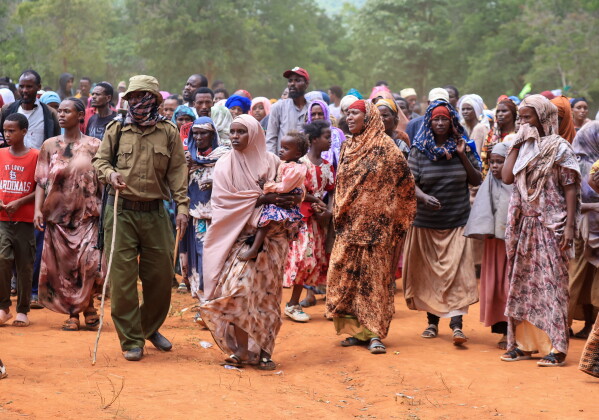
According to the United Nations refugee agency (UNHCR), approximately 36,000 people initially crossed into Kenya from Ethiopia following clashes around Moyale, with women and children making up a significant proportion of those arriving. The agency warned that urgent humanitarian needs include food, safe drinking water, shelter, sanitation and healthcare.
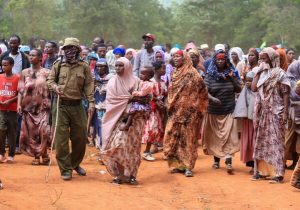
The influx has placed enormous pressure on communities in Kenya’s Marsabit County, where local authorities, humanitarian agencies and residents are struggling to accommodate the growing number of displaced people. UNHCR said it has deployed emergency teams to the area and is working alongside the Department of Refugee Services, the International Organization for Migration (IOM), UNICEF, the World Food Programme (WFP) and the Kenya Red Cross Society to coordinate assistance.
The latest violence erupted in Ethiopia’s Moyale area, a region that sits along the contested boundary between the Oromia and Somali regional states.
Reports indicate tensions escalated after authorities from the Somali Regional State inaugurated a government office and hoisted the Somali regional flag in an area claimed and administered by Oromia authorities. The move triggered confrontation between security forces and local groups, eventually leading to deadly clashes.
The violence further intensified after the killing of a 13-year-old girl, identified in several reports as Diqqoo Jaataan Aagaa. Competing accounts have emerged regarding who was responsible for the shooting, but the incident is widely cited as a catalyst for the subsequent fighting.
UNHCR noted that disputes between the Somali and Oromia regions over boundaries and resources have persisted for more than two decades, periodically triggering displacement and instability along the border.
Most of those fleeing crossed into Kenya through Moyale, where reception facilities and host communities have struggled to absorb the sudden arrivals.
The Kenya National Commission on Human Rights (KNCHR) reported that more than 15,000 displaced people were being housed in temporary shelters, including churches, schools and community facilities, while more than 20,000 others sought refuge with relatives and host families.
Shelter sites identified by KNCHR include St. Mary’s Catholic Church, Harhosha Secondary School, Manyatta Burji, Sessi and Lanzi Mosque Hospital.
Humanitarian agencies say the influx is stretching already limited resources in northern Kenya, with food, water, healthcare and sanitation services under growing strain.
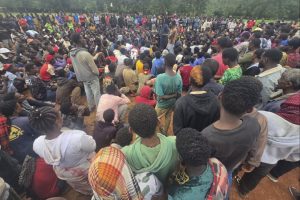
Marsabit County Commissioner Stanley Kamande has appealed for additional support, including tents, blankets, mosquito nets and sanitation facilities as authorities attempt to manage the humanitarian emergency.
Aid agencies have expressed concern over the number of women and children arriving from Ethiopia.
UNHCR said many displaced families fled with few possessions and remain highly vulnerable to disease, hunger and protection risks.
KNCHR raised alarm over maternal healthcare needs, reporting that several women had given birth in displacement sites after crossing into Kenya. The commission urged national and county authorities to deploy medical personnel and supplies to support safe deliveries, newborn care and postnatal services.
Rainfall in the border region has further heightened fears of disease outbreaks, exposure and deteriorating sanitation conditions in overcrowded shelters.
The Kenya Red Cross Society has launched emergency operations in Moyale, distributing food, temporary shelter materials, blankets, water containers and other essential household items. Volunteers have also been providing first aid and helping reunite family members separated during the displacement.
UNHCR says emergency household and shelter supplies have already been mobilised to support nearly 12,000 people, with efforts underway to expand assistance as needs continue to grow.
Registration of new arrivals has also begun at temporary camps, with humanitarian agencies seeking to establish accurate population figures and improve aid coordination.
While the initial UNHCR estimate cited approximately 36,000 arrivals, more recent assessments suggest the displacement may be significantly larger.
UNHCR, IOM and humanitarian partners later reported that the number of people who crossed into Kenya could be as high as 50,000, although registration and verification exercises remain ongoing. Officials describe the situation as fluid, with additional arrivals continuing to be reported.
The United Nations Office for the Coordination of Humanitarian Affairs (OCHA) said authorities and aid agencies are conducting rapid assessments while scaling up emergency support for displaced people and host communities.
Humanitarian organisations warn that resources may soon prove inadequate if the influx continues.
UNHCR, UNICEF, IOM and WFP have jointly appealed for US$8.9 million (approximately KSh1.16 billion) to support up to 50,000 displaced people over a three-month period. The funding would be used to provide food assistance, shelter, water, sanitation, registration and protection services.
Aid agencies say support is urgently needed not only for those fleeing the violence, but also for Kenyan host communities that are sharing food, shelter and already scarce resources with newly arrived families.
For now, humanitarian workers warn that without sustained funding, continued access and a reduction in violence across the border, the crisis risks deepening further as more people seek refuge in northern Kenya.