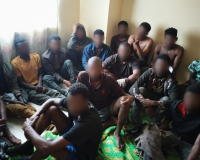
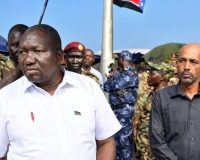
Many asylum seekers from Burundi and other countries who had turned to small businesses after USAID pulled out of Kenya last year now find themselves stranded, following President William Ruto’s recent declaration that foreigners should not run petty trade or hawking ventures — a directive that has forced some to abandon their livelihoods and even seek to return home.
Hundreds of Burundian asylum seekers and refugees who had turned to hawking and small retail shops after USAID pulled out of Kenya last year now find themselves stranded following President William Ruto’s directive that foreigners should not operate small-scale businesses. The announcement, made on September 2 at State House, ordered authorities to begin shutting down such ventures from September 7, arguing that hawking and petty retail must be reserved for Kenyans.
The move triggered panic among migrant communities, with dozens of Burundians flocking to their embassy in Nairobi this week seeking travel documents to return home. Reuters reports that Kenya’s government has offered a temporary amnesty to undocumented East Africans, but uncertainty remains for the estimated 16,000 Burundian refugees and asylum seekers living in the country .
19098b2b-cd90-4a38-b1eb-c216d75e2b99
Many of these asylum seekers and refugees had ventured into small businesses after USAID suspended nearly $950 million in funding to Uganda in February 2025, collapsing food rations at settlements like Kyangwali. In Uganda, a 2017 refugee policy granting land and work rights allowed families to survive by farming cassava and maize. But in Kenya, where refugees lack similar guarantees, many turned to petty trade in Nairobi’s Eastleigh and other towns to fill the gap left by aid cuts.
President Ruto insists the crackdown is meant to protect Kenyan traders, saying foreign investment is welcome in large-scale ventures but not in hawking or small retail. “It cannot be that a person comes from China or elsewhere to be a hawker or open a small shop,” he said, linking the directive to the pending Local Content Bill 2025, which proposes reserving certain businesses exclusively for citizens .
Human rights defenders warn the policy risks pushing vulnerable refugees deeper into poverty. Unlike Uganda’s Comprehensive Refugee Response Framework, Kenya does not grant refugees land or formal work rights, leaving them dependent on aid or informal trade. With USAID gone and small businesses now restricted, many migrants face the stark choice of returning home or slipping into illegality.
The crackdown underscores a wider regional divide: Uganda’s 2017 refugee framework has cushioned families at Kyangwali against aid cuts, while Kenya’s restrictive policies leave refugees exposed to sudden shocks. As one Burundian trader outside his embassy put it, “We survived USAID cuts by selling vegetables. Now even that is being taken away.”