“Young adults constitute a significant portion of global migratory movements, with children making up half of the word’s refugees. Despite bearing the least responsibility for climate change impacts, children and youth are disproportionately affected by its consequences. As climate change exacerbates, local livelihoods diminish, and successive generations face persistent poverty and inequality, the aspirations of youth are compromised.”
Climate-induced migration, activists and stakeholders have pushed for youth-focused strategies in a bid to address the urgent challenges faced by young people amidst the climate changing patterns.
According to United Nations- International Organization for Migration, ‘climate change predictions for the 21st century indicate that even more people are expected to be on the move as extreme weather-related events, such as floods, droughts and storms become more frequent and intense and changes in precipitation and temperature patterns impact livelihoods and human security.’
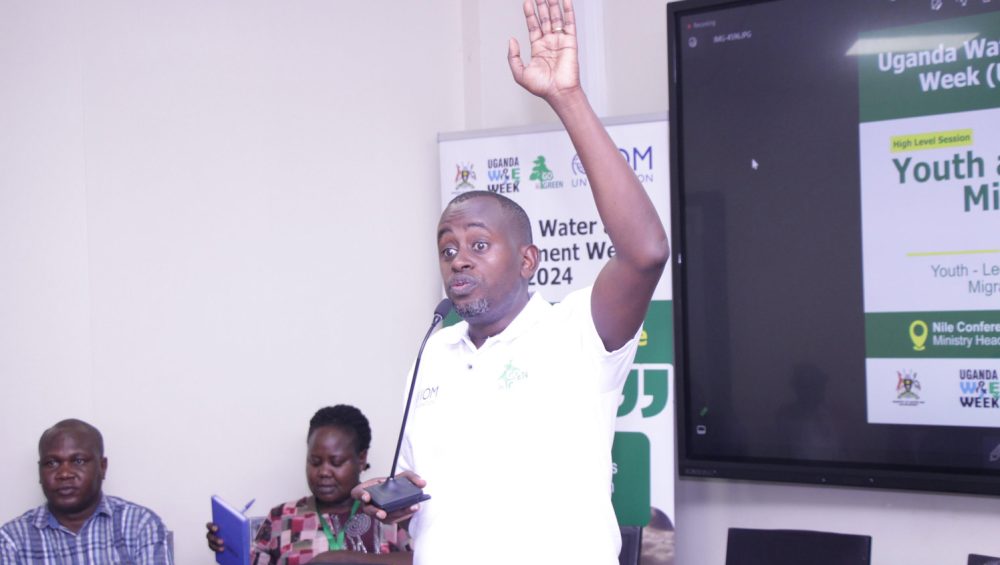
Youth Go-Green in partnership with International Organisation for Migration (IOM) Uganda Country Office, during a Youth and Climate Migration High-level session, convened at the Uganda Water and Environment Week, last week, emphasized the pivotal role of youth in tackling the repercussions of climate change, despite being the least responsible for its causes.
Youth Go-Green through their concept note in part that “Young adults constitute a significant portion of global migratory movements, with children making up half of the word’s refugees. Despite bearing the least responsibility for climate change impacts, children and youth are disproportionately affected by its consequences. As climate change exacerbates, local livelihoods diminish, and successive generations face persistent poverty and inequality, the aspirations of youth are compromised.”
Highlighted at the event was the intricate nexus between environmental shifts and migration patterns, particularly affecting youth in Uganda and East Africa. As climate change exacerbates existing disparities, young individuals find themselves disproportionately impacted, hindering their ability to adapt and prosper.
Some key objectives spearheaded by climate migration advocates include but are not limited to;
Raising Awareness: Shedding light on the adverse effects of climate-induced migration on young populations and emphasizing their agency in addressing these challenges.
Showcasing Innovation: Spotlighting youth-led initiatives that demonstrate resilience and offer solutions to mitigate the impacts of climate migration.
Fostering Dialogue: Facilitating discussions among stakeholders across various sectors to foster collaborative efforts in tackling climate migration challenges affecting youth.
Promoting Policy Integration: Propagating the Kampala Declaration on Migration, Environment, and Climate Change among Ugandan youth and advocating for its incorporation into government policies.
Generating Policy Recommendations: Formulating youth-inclusive policy recommendations to be presented as the Youth Statement on Climate Migration at the UWEWK closing session.
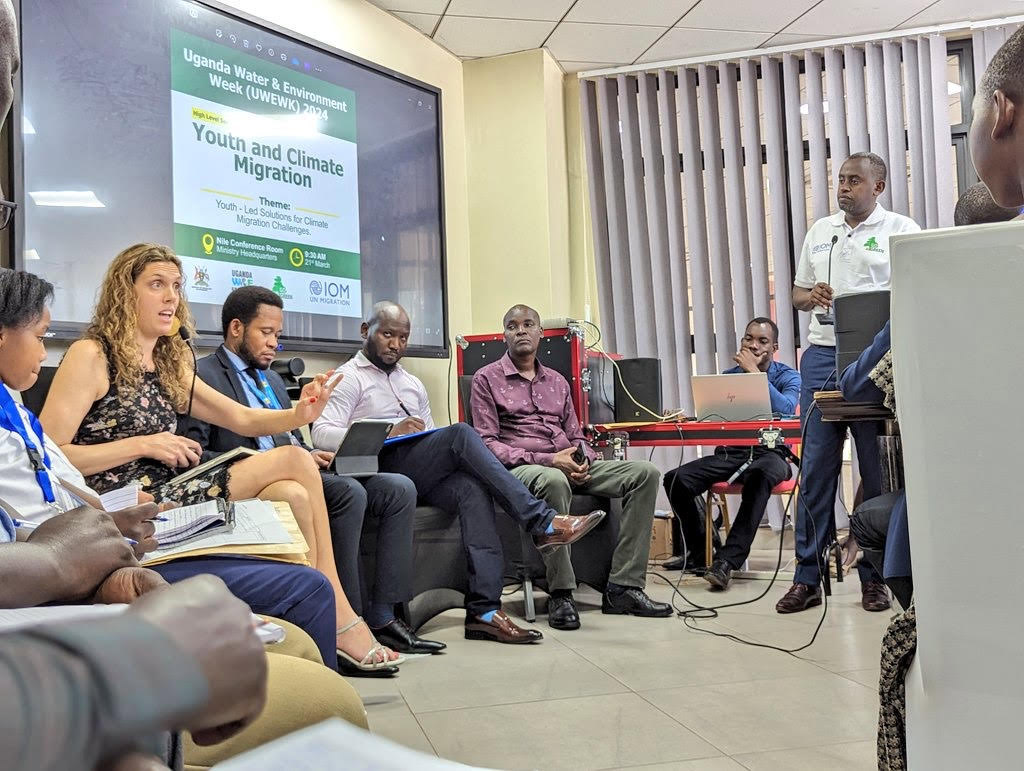
Some of the key themes and topics addressed during the session included: Understanding the intricate relationship between Climate Change and Migration, showcasing youth-led initiatives for Climate Resilience and Adaptation, advocating for Policy Engagement to involve youth in Climate Migration Solutions, cultivating Partnerships and Collaboration for Effective Climate Action, unpacking and Localizing the Kampala Declaration among the youth in Uganda.
Climate migration stands as a stark reality demanding urgent attention and concerted action. As the impacts of climate change continue to escalate, the phenomenon of migration driven by environmental factors will only intensify, affecting millions worldwide, particularly vulnerable communities and youth. Addressing climate migration requires holistic approaches, encompassing not only immediate relief efforts but also long-term strategies focused on adaptation, resilience-building, and global cooperation. By recognizing the interconnectedness of climate, migration, and human rights, and by prioritizing the voices and needs of affected populations, we can strive towards a more sustainable and equitable future for all.
The 7th Uganda Water and Environment Week (UWEWK) happened last week, March 18 to March 22, 2024 organized by the Ministry of Water and Environment in collaboration with various partners, which aimed to address pressing issues surrounding water, environment, and climate change in Uganda, under the theme “Rethinking collective action and innovative solutions to water, environment, and climate change crisis in Uganda.”, with the ultimate focus on fostering discussions, sharing knowledge, as well as inspiring action towards sustainable development.