Stevo arrived in Nairobi on July 28 aboard a repatriation flight from Jeddah, reuniting with family moments before midnight at Jomo Kenyatta International Airport. Mudavadi praised Saudi Arabia’s cooperation and credited the Kenyan Diaspora, Muslim World League, and community-led fundraising—approximately KSh 129 million in diyya (blood money)—for facilitating the release. Foreign Affairs PS Korir Sing’oei revealed that Mudavadi personally wrote to Saudi officials and led diplomatic coordination that saved Munyakho from an irreversible fate.
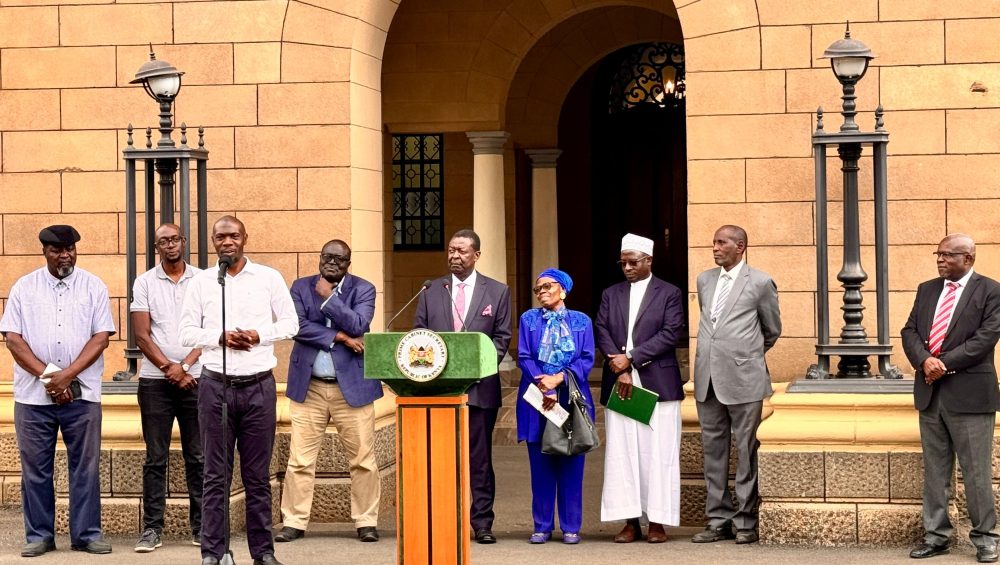
Stephen Munyakho, a Kenyan national condemned to death in Saudi Arabia, was welcomed home after a 14-year ordeal that ended through high-level diplomacy, collective fundraising, and legal negotiations. On Thursday, Prime Cabinet Secretary Musalia Mudavadi presided over a press briefing at his Railway Offices, officially receiving Stevo and affirming the government’s commitment to protecting citizens abroad.
Prime Cabinet Secretary Musalia Mudavadi who hosted journalists on Thursday at his Railway Office to mark the humanitarian return of Stephen “Stevo” Munyakho—who spent 14 years on death row in Saudi Arabia—back to Kenya termed his return as a ‘miracle. Stevo, as he’s affectionately known, was formally handed over by Mudavadi after the Kenyan government’s tireless diplomatic and community-backed efforts secured his release.
Stevo arrived in Nairobi on July 28 aboard a repatriation flight from Jeddah, reuniting with family moments before midnight at Jomo Kenyatta International Airport. Mudavadi praised Saudi Arabia’s cooperation and credited the Kenyan Diaspora, Muslim World League, and community-led fundraising—approximately KSh 129 million in diyya (blood money)—for facilitating the release. Foreign Affairs PS Korir Sing’oei revealed that Mudavadi personally wrote to Saudi officials and led diplomatic coordination that saved Munyakho from an irreversible fate.
Stephen Munyakho’s return is the end of a painful chapter that began in 2011, when a workplace altercation in Saudi Arabia led to the death of a Yemeni colleague. Initially convicted of manslaughter, his sentence was later upgraded to murder under Sharia law—carrying the death penalty. His execution was scheduled despite appeals, until Kenya’s diplomatic intervention gained time to negotiate compensation and legal reconsiderations.
Mudavadi lauded the role of Saudi diplomacy and Kenyan statecraft, calling the release a testament to robust bilateral relations. “I acknowledge the Saudi government for providing us space for earnest engagement to avert a miscarriage of justice,” he stated.
Also attending was Foreign Affairs PS Dr. Korir Sing’oei, who played a frontline role. He recounted how Munyakho’s mother, Dorothy Kweyu, approached his office in May 2024 seeking Government assistance. With execution looming and time running out—Sky-high compensation demands and legal finality—he revealed, “For 15 years this matter had not been resolved… the only thing that could overturn that execution was payment of $1 million”.
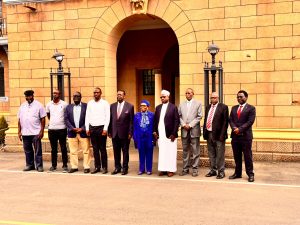
After negotiations, the deceased’s family accepted diyya of approximately KSh 129 million, largely raised through coordinated efforts of the Muslim World League, religious institutions, civic groups, and fellow Kenyans. The court commute allowed Munyakho to leave prison, perform Umrah, and await repatriation. Saudi authorities covered deportation costs; Kenya prepared emergency travel documentation to facilitate safe return.
Stepping forward to thank his supporters, Stevo described his homecoming as miraculous. “I’m grateful to Allah for this second chance… it’s wonderful to be back home,” he told journalists briefly before retiring to rest.
Mudavadi extended gratitude to all who contributed—particularly Munyakho’s mother, who mobilized KSh 20 million locally to kickstart the fundraising; the Muslim World League, and government officials including PS Sing’oei and diaspora envoys. He noted Munyakho had dealt with four Kenyan ambassadors during his incarceration, underscoring the coordinated nature of the rescue efforts.
Stevo’s return arrives amidst a broader spotlight on Kenyan citizens facing peril abroad. With over 100 Kenyans detained across the Gulf and others on capital charges, his case highlights the urgent need for stronger diplomatic protections and consular support systems. Civil society groups have renewed calls for institutional reforms to support high-risk diaspora workers.
For Migrant Narratives Africa, this story resonates deeply: it is a human rights victory powered by citizen action, state engagement, and cross-border solidarity. Stevo’s ordeal reflects broader themes that shape migration narratives—citizen protection, legal precarity abroad, faith-based mobilization, and the invisible networks that secure justice for individuals trapped within foreign penal systems. His rescue underscores not just one life saved, but the national capacity to uphold dignity and defend Kenyans wherever they are.