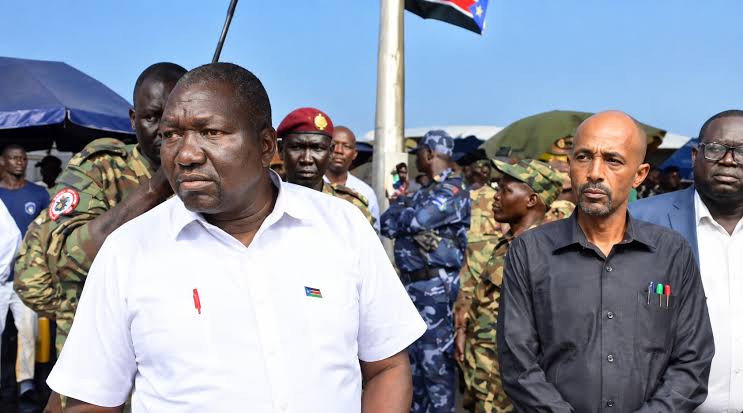
Juba authorities are pushing to reserve small-scale retail businesses for South Sudanese citizens, with County Caretaker Commissioner Kalisto Lado insisting that foreign nationals should stay out of sectors such as boda boda transport, chapati stalls and the sale of vegetables and charcoal. While Lado has denied reports that foreigners were ordered to leave South Sudan, his stance has raised concerns among migrant traders and reignited debate over the balance between protecting local livelihoods and upholding East African Community commitments on free movement and regional economic integration.
A growing push by traders and local authorities in South Sudan’s capital to reserve small-scale businesses for citizens has reignited debate over the role of foreign migrants in the country’s economy and the future of regional integration within the East African Community (EAC).
Juba County Caretaker Commissioner Kalisto Lado has called for foreign nationals to stay out of small retail businesses, including chapati stalls, boda boda operations and the sale of products such as tomatoes, onions and charcoal, arguing that such enterprises should be reserved for South Sudanese citizens.

Instead, Lado said foreign investors should focus on wholesale trade, factories and larger-scale investments capable of creating employment opportunities for locals.
“The retail business is only for South Sudanese,” Lado said, maintaining that foreigners wishing to invest in South Sudan should operate at a higher commercial level and employ South Sudanese workers.
His remarks triggered widespread reports that Ugandans, Kenyans, Burundians and Eritreans had been ordered to leave the country. However, Lado later dismissed those claims, saying he had not issued any seven-day ultimatum and lacked the authority to deport foreign nationals from South Sudan.
Despite the clarification, he stood by his position that foreign nationals should not participate in small-scale retail trade.
The controversy has raised concerns among migrant communities whose livelihoods depend on small businesses and informal trade in Juba. Foreign nationals are involved in a range of economic activities in the city, including retail shops, restaurants, transport services and other informal enterprises.
For many migrants, small businesses provide an accessible source of income and an entry point into the labor market. Any move to restrict their participation in the retail sector could significantly affect their livelihoods, even if they are not required to leave the country.
The debate also highlights a broader tension between domestic efforts to protect employment opportunities for citizens and regional commitments to free movement under the East African Community.
South Sudan, Kenya, Uganda and Burundi are members of the EAC, whose Common Market Protocol promotes the free movement of persons, labor, services and the right of establishment across member states.
However, governments within the bloc retain the authority to regulate labor markets and business activities within their borders. South Sudan has previously emphasized that foreign workers must possess valid work permits and comply with national labor laws.
The issue is not new in South Sudan. Lado advanced similar proposals in 2021 while serving as Juba city mayor, arguing that foreigners should leave small-scale retail trade to South Sudanese citizens and focus instead on wholesale business and manufacturing.
The latest remarks come amid similar debates elsewhere in East Africa about foreign participation in small businesses, as governments face increasing pressure to balance economic nationalism with regional integration commitments.
For now, no verified order has been issued requiring foreign traders to leave South Sudan. However, uncertainty remains over whether authorities will move to formally restrict migrants from operating in small-scale retail businesses, a sector on which many depend for their livelihoods.