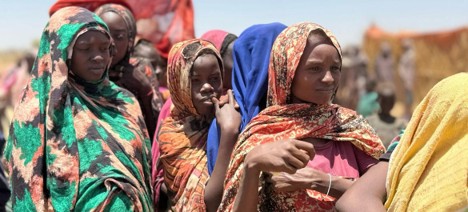
“The warning signs are impossible to ignore. Across Sudan, families are fleeing violence, losing access to water, electricity, and healthcare, and now facing an added burden of destructive floods. Without urgent action to protect civilians and restore essential services, the suffering will deepen,” – IOM Director General, Amy Pope.
Sudan’s humanitarian crisis is entering a more dangerous phase as intensified fighting and seasonal flooding have displaced an additional 200,000 people, while disruptions along major international shipping routes threaten the delivery of vital humanitarian supplies.
The International Organization for Migration (IOM) said on 19 August that escalating conflict had forced another 200,000 people from their homes since late 2025. The latest displacement comes as destructive seasonal floods compound the effects of more than three years of war.
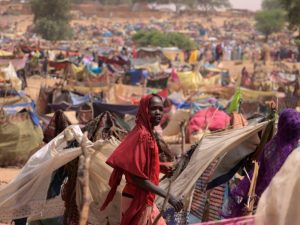
The situation is particularly severe in areas affected by renewed fighting. IOM reported that nearly 11,000 people fled two villages in North Kordofan within just three days, illustrating how quickly renewed violence can overwhelm communities already struggling with limited access to food, water, healthcare and shelter.
For displaced families, however, the danger does not end when they escape the fighting. Flooding during the rainy season is destroying shelters, disrupting roads and increasing the risk of disease outbreaks, creating another layer of vulnerability for communities that have already lost homes and livelihoods.
The wider humanitarian picture remains alarming. UNICEF estimates that 33.7 million people in Sudan require humanitarian assistance, while more than 9.1 million people are internally displaced. The agency also reported that 17.3 million children are in need of humanitarian assistance.
Aid faces another obstacle
Humanitarian agencies are now facing a challenge beyond Sudan’s battlefields.
IOM warned that delays in global supply chains, particularly through the Red Sea and Strait of Hormuz, are placing additional pressure on an already fragile humanitarian response. These routes are important for the movement of goods and supplies into the region, meaning prolonged disruption can increase transportation difficulties and costs for humanitarian organizations.
The disruption comes at a time when humanitarian organizations are already struggling to meet Sudan’s enormous needs.
The 2026 humanitarian response plan remains significantly underfunded. A UN briefing earlier this month put funding at only about 40 percent, while UNICEF reported a 64 percent funding gap against its 2026 humanitarian appeal as of June.
This means that even when humanitarian organizations can reach affected communities, they may not have enough resources to sustain food distribution, healthcare, clean water, sanitation and shelter programmes.
The crisis is no longer only about displacement
Sudan’s emergency has increasingly become a crisis of survival for both displaced people and communities hosting them.
Years of fighting have damaged essential infrastructure, while millions of people continue to face hunger and limited access to healthcare. UNICEF estimates that around 70 percent of health facilities in the country are non-functional and that 19.5 million people were facing high levels of acute food insecurity by mid-2026.
The rainy season adds further pressure. Flooding can contaminate water sources and create conditions favorable for disease outbreaks, while damaged roads make it harder for humanitarian agencies to move supplies to isolated communities.
Yet humanitarian workers and local organizations continue to provide assistance despite these constraints. The Sudanese Red Crescent, supported by the International Federation of Red Cross and Red Crescent Societies, has volunteers operating across all 18 states, providing services including mobile healthcare, water and sanitation support, cash assistance and flood preparedness.
A need for more resilient humanitarian response
The latest displacement highlights the need for humanitarian assistance that can respond not only to sudden conflict but also to climate-related shocks and disruptions in international supply chains.
Pre-positioning emergency supplies before roads become inaccessible, strengthening local humanitarian networks and investing in water and sanitation infrastructure could help communities withstand future floods and disease outbreaks.
Humanitarian agencies have already begun pre-positioning supplies ahead of the rainy season. UNICEF said it delivered thousands of tonnes of critical supplies across Sudan and has been scaling up preparations to maintain operations during the rains.
But these efforts require sustained international financing and safe humanitarian access.DG
For the hundreds of thousands newly displaced, the immediate priority remains basic: somewhere safe to sleep, clean water to drink, food to eat and access to medical care. As conflict, floods and global transport disruptions converge, the ability of aid agencies to provide those essentials increasingly depends on whether international support can keep pace with Sudan’s rapidly changing crisis.
The warning from humanitarian agencies is therefore not simply about the number of people displaced. It is about preventing a new wave of displacement, hunger and disease from turning an already devastating conflict into an even deeper regional humanitarian emergency.