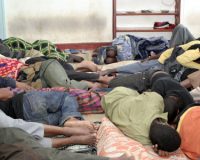
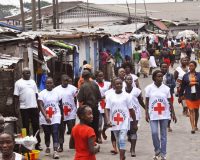
“This is not a slow-burning emergency—it’s a full-blown disaster,” said the U.S. Committee for Refugees and Immigrants (USCRI) President and CEO Eskinder Negash. “Families who fled war, persecution, and unimaginable trauma are now wasting away in what were meant to be places of refuge.”
A severe hunger crisis is unfolding in Kenya’s refugee camps, with nearly 700,000 refugees—most of them women and children—now facing catastrophic food shortages following drastic cuts in humanitarian assistance, largely triggered by the suspension of key U.S. aid programs.
The U.S. Committee for Refugees and Immigrants (USCRI) has sounded the alarm, warning that the situation is becoming unmanageable in the Kakuma, Dadaab, and Kalobeyei settlements, where food stocks have dwindled and desperation is rising.

“This is not a slow-burning emergency—it’s a full-blown disaster,” said USCRI President and CEO Eskinder Negash. “Families who fled war, persecution, and unimaginable trauma are now wasting away in what were meant to be places of refuge.”
The crisis has been directly linked to recent funding shortfalls, especially after the United States froze major humanitarian programs earlier this year. The U.S., once the largest single donor to the World Food Programme (WFP), had provided up to 70% of WFP’s food aid budget in Kenya’s camps.
According to USCRI, the food rations currently being distributed to refugees are just 28% of the full nutritional requirement—barely enough to survive. Affected households are receiving only three kilos of rice, one kilo of lentils, and 500ml of cooking oil per person per month, well below UN-recommended caloric thresholds.
“Simultaneously, all cash-transfer assistance has been halted, eliminating refugees’ ability to purchase essential proteins, vegetables, and supplementary items,” the organization said.
The collapse of the cash-based support system, once used to supplement food rations with market-based purchases, has worsened the crisis, stripping refugees of any flexibility or nutritional balance in their diets.
USAID Funding Freeze Deepens the Crisis

The cuts are part of a broader U.S. aid freeze under Executive Order 14169, signed by President Trump in early 2025. The order led to the suspension of more than 80% of USAID-funded programs, including food aid, global health, education, and climate resilience projects in over 100 countries.
In Kenya alone:
- Over 40% of WFP’s food aid allocation was slashed following the freeze.
- More than US$207 million in humanitarian aid, previously backed by U.S. funding, has now stalled.
- Medical facilities like Lodwar County Hospital have laid off over 60 USAID-supported staff, affecting immunization and maternal health programs.
The broader impact is devastating. A Lancet study projects that the aid freeze could result in up to 1.78 million additional global deaths annually through 2030. In refugee camps like Kakuma, this translates into overwhelmed hospitals and a rising number of severely malnourished children now being admitted in record numbers.
“The malnutrition rate among refugee children under five and pregnant or breastfeeding women in Kenya is now above 13%,” USCRI reported. “Starving children fill hospital beds, with time running out.”
Despair at the Heart of the Camps
Beyond statistics, the reality on the ground is heart-wrenching.
Several refugees, particularly mothers, have taken their own lives—unwilling to watch their children starve. Others are forgoing meals so that the youngest can eat, while teenage boys and girls are dropping out of school to search for food or income in nearby towns, often exposing themselves to exploitation and danger.
“Behind every statistic is a child going hungry, a mother skipping meals, a teenager losing their future,” said Eskinder Negash. “These are not abstract numbers—they are families locked in open-air prisons, abandoned by the very systems meant to protect them.”
What Lies Ahead?
Kenyan authorities and humanitarian agencies warn that unless emergency funding is restored, the camps could descend into a full-scale famine within weeks.
The WFP, now operating at a fraction of its capacity, has already begun reducing operations and may be forced to suspend key programs altogether. Aid workers on the ground say they are rationing hospital supplies and turning away malnourished children due to overcrowding.
Globally, the U.S. aid freeze is affecting operations in over 30 African countries, including Sudan, Ethiopia, Uganda, and Somalia—putting millions more at risk.
A Call to Action
USCRI and other humanitarian groups are now calling on:
- The United States to urgently reinstate food and cash aid programs, particularly in high-risk refugee settings like Kenya;
- Other donors—including the EU and Gulf states—to fill the gap left by U.S. funding;
- Kenyan authorities to expand domestic safety nets and support refugee-hosting counties like Turkana.
Migrant Narratives Africa continues to monitor the situation and calls on local and international actors to act before this silent emergency becomes an irreversible catastrophe.