Among the myriad of critical topics discussed were the issue of missing migrants and the imperative of robust data collection, the enhancement of regular migration pathways while ensuring the protection of migrants, the rising phenomenon of climate-induced mobility necessitating adaptive solutions, and the paramount benefits of harmonizing regional policies and legislation.
Banjul, Gambia. The United Nations Network on Migration (UNNM) has hosted an interregional dialogue that marks a pivotal step towards the implementation of the Global Compact for Safe, Orderly and Regular Migration (GCM) in Africa and the Americas.
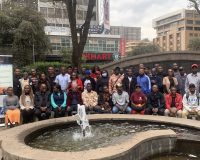
The two-day event, which was concluded recently in Banjul, the capital of Gambia was a beacon of collaboration and knowledge sharing, aiming to enhance information exchange on emerging migration trends and data collection across continents.
The UN Network on Migration for West and Central Africa, co-chaired by the International Organization for Migration (IOM), organized the dialogue in collaboration with the Office of the High Commissioner for Human Rights (OHCHR) and the Government of The Gambia.
The event brought together nine Inter-State Consultation Mechanisms on Migration (ISCMs) to exchange vital insights and contributions towards achieving the ambitious goals of the GCM.
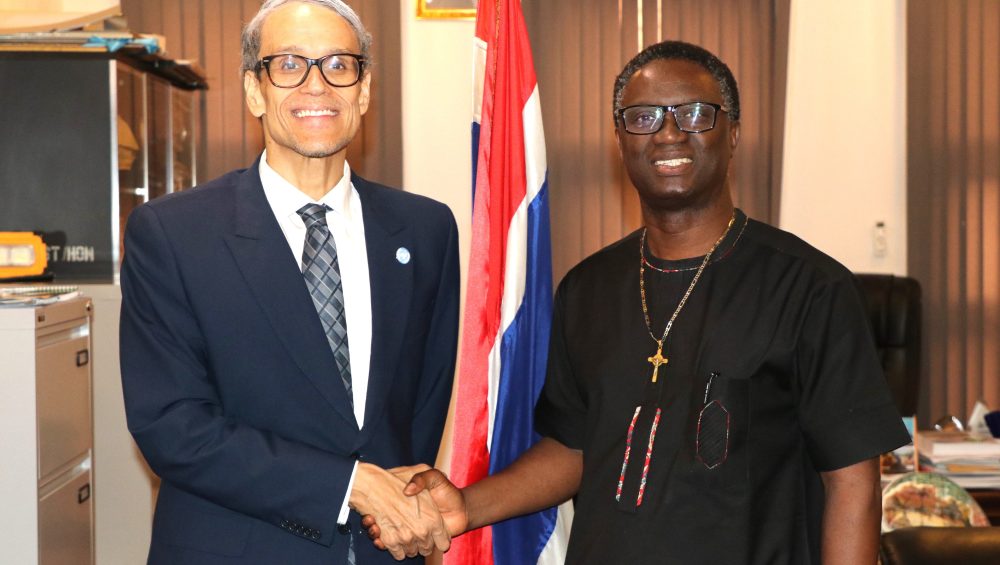
“Our collective goal is clear: to achieve a comprehensive understanding of the GCM’s footprint across Africa and the Americas to co-create a joint declaration that will significantly contribute to the GCM Regional Reviews,” declared Karl Frédérick Paul, UN Resident Coordinator in The Gambia.
“Let’s not forget the human stories behind the statistics – migration is about people, their aspirations, and their journeys and has the potential to be a driver of development, economic growth and positive change.”
Participants meticulously assessed the progress made so far, and a detailed report on the key findings will be presented at the GCM Regional Review meetings in October 2024 for Africa and March 2025 for the Americas.
Among the myriad of critical topics discussed were the issue of missing migrants and the imperative of robust data collection, the enhancement of regular migration pathways while ensuring the protection of migrants, the rising phenomenon of climate-induced mobility necessitating adaptive solutions, and the paramount benefits of harmonizing regional policies and legislation.
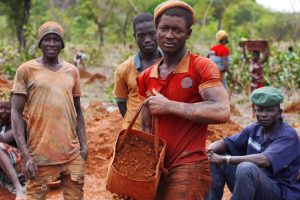
These discussions underscore the importance of coordinated efforts in tackling the multifaceted challenges of migration.
The GCM recognizes ISCMs as vital actors in migration governance and the implementation, follow-up, and review of the GCM. These mechanisms provide invaluable forums for addressing regional challenges and devising solutions to enhance GCM implementation.
“It is key to work together to harness the benefits of safe, orderly and regular migration, contributing not only to the objectives of the GCM but also to the Sustainable Development Goals,” emphasized Kristina Mejo, IOM Senior Regional Liaison and Policy Advisor for West and Central Africa.
“By bringing together two continents, we create a unique platform for sharing best practices and common challenges, ensuring a coordinated and inclusive approach to migration governance,” added Tshenolo Florence Omphitlhetse, representing the Pan-African Forum on Migration.
The event saw the participation of senior technical representatives from ISCMs and Regional Consultative Processes (RCPs), such as the Migration Dialogue for Southern Africa (MIDSA), Migration Dialogue for COMESA Member States (MIDCOM), Regional Ministerial Forum on Migration for East and Horn of Africa (RMFM), Pan African Forum on Migration (PAFOM), Regional Conference on Migration (RCM), South American Conference on Migration (SACM), Ibero-American Network of Migration Authorities (RIAM), and Central American Commission of Migration Directors (OCAM).
Additionally, the League of Arab States participated as the Technical Secretariat of the Arab Regional Consultative Process on Migration and Refugee Affairs, underscoring the critical role of RCPs in regional migration governance dialogues.
Adopted by the United Nations General Assembly in 2018, the GCM provides a comprehensive framework for governing migration in a safe, orderly, and regular manner. It calls for shared responsibilities and collective action among Member States to address the complexities of migration.
The event’s success was made possible through the generous financial support of the U.S. Department of State Bureau of Population, Refugees and Migration through the Africa Regional Migration Program, and the Kingdom of Netherlands through the PROMIS program.
This interregional dialogue stands as a testament to the power of collaborative efforts in driving forward the agenda of safe, orderly, and regular migration, setting a strong foundation for future advancements in migration governance.
Courtesy/ IOM-UN Migration