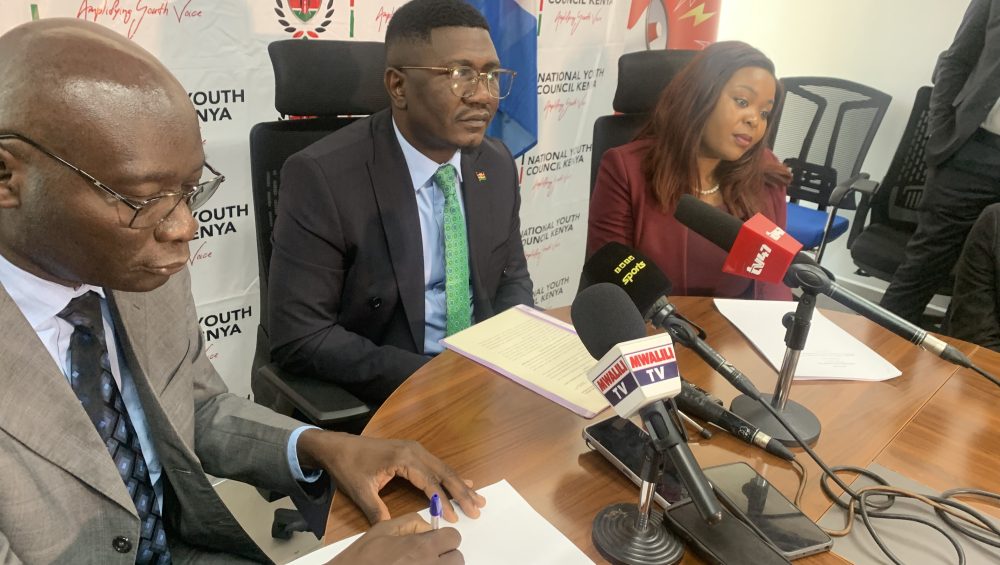
Kenya has announced its first National Youth Council elections since 2012, opening the door for millions of young people—many of them first-time voters—to formally elect their representatives from ward to national level. The move follows years of youth-led protest, growing public discontent, and mounting calls for inclusion in national decision-making.
This comes at a time when Gen Zs and other young Kenyans, long dismissed as ‘leaderless’ during recent protests and civic unrest, are demanding structured political representation and a seat at the decision-making table.
After a 13‑year hiatus, Kenya officially relaunched the National Youth Council (NYC) election process today, clearing the path for the first fully democratically elected youth leadership since 2012. The announcement, delivered by Principal Secretary Fikirini Jacobs Kato for the Ministry of Youth Affairs, Creative Economy and Sports, marks a pivotal moment in Kenya’s youth governance and civic inclusion.
In approving administrative and financial preparations on July 21, Cabinet Secretary Hon. Salim Mvurya granted authority to begin the electoral process in earnest — including stakeholder mobilisation, logistics funding, and civic education campaigns. Jacobs emphasized that this election “is not merely a formality but a vital step towards empowering Kenya’s young population to engage actively in governance.” She stressed: “Most youth today have never experienced this process. This is your time to show up, to vote, to lead”.

Structure, Eligibility, and Mechanics
The election will proceed in four phases:
- Nominations — candidates must secure at least 50 registered youth voter endorsements.
- Ward Elections — each ward elects six delegates (three male, three female). With 1,450 wards nationwide, this results in 8,700 delegates.
- Constituency Elections — ward delegates elect one male and one female from each of Kenya’s 290 constituencies, creating a pool of 580 constituency-level delegates.
- National Youth Congress — this body of 580 delegates elects eight council members and nominates up to eight more who are officially appointed by the Cabinet Secretary. Additionally, 31 substitute members are named to ensure continuity.
Candidates must be under 35 by December 31 of the election year, hold at least a secondary school certificate, provide a police clearance certificate or recommendation from a local Chief, meet the standards of integrity laid out in Chapter Six of the Constitution, and accommodate inclusion of persons living with disabilities.
Why This Matters for Youth—and MNA
Kenyan youth have been the driving force behind recent waves of protest and civic awakening. From the eruption of mass anti-tax demonstrations in mid‑2024, organised under the hashtag #RutoMustGo and led largely by Gen Z, to the tragic death of blogger Albert Ojwang in police custody in June 2025 that triggered sharper unrest, young Kenyans have repeatedly asserted their demand for accountability and reform.
These protests have been characterised by youth-led, decentralized activism—leveraging social media, satire, crowdfunding, and community solidarity—to resist state repression including alleged abductions, torture, and live rounds fired into crowds. One activist noted, “We organise … because we believe in showing up for each other. Our solidarity is our strongest resistance”.

As MNA’s mission focuses on amplifying migrant and youth voices, this election offers a powerful institutional channel for young Kenyans to convert protest energy into formal representation. Instead of extrajudicial risk or fragmented organizing, youth now have an arena to shape policy, influence national youth programs, and assert place in decision‑making bodies at county and national levels.
Given youth frustration with violence and exclusion—illustrated most starkly by dual personal tragedies like Collins and Stephen, childhood friends injured on opposite sides during the July clashes, driven not by ideology but by economic desperation—this electoral opportunity stands as a democratic alternative to cycles of conflict.
Civic Engagement and Role of Stakeholders
Jacobs announced that civic education will be a priority moving forward, helping youth and eligibility stakeholders understand nomination procedures, voting rights, and integrity requirements. She said the Cabinet Secretary will soon gazette official dates, and youth can expect updates via the NYC website and official social handles.
The appeal also extends to public and private partners. The Ministry urged development institutions, NGOs, media, and civil society organisations to offer financial and in‑kind support for logistics, voter education, and electoral oversight, underscoring the need for inclusivity and integrity across the process
Potential Impact—and Why Youth Must Act Now
- Transforming protest into governance: This election provides a legitimate, legal alternative to street activism—enabling youth to translate their demands into council influence and policy oversight.
- Bridging representation gaps: With most youth born after the last elections in 2012, this is their first real chance to engage legislatively. The election promises to build a stronger, more credible Council that reflects contemporary youth identities and aspirations.
- Institutional accountability: As the apex governing body for youth in Kenya, the NYC will help ensure youth-related policies (such as in unemployment, creative economy, youth empowerment funding, migration and diaspora affairs) are informed by young people themselves.
What MNA Can Leverage
- Amplify youth voices and civic literacy: MNA can collaborate with local branches to produce explainers, run civic education sessions, and support young migrants interested in running or voting.
- Link diaspora communities: Kenyan youth abroad, many of whom engaged online in protest movements, can also participate—for example, through online voter registration drives and developmental diaspora representation.
- Document lived narratives: As young people engage in this election, MNA can collect testimonials, track platforms, and explore how migrant and mobile youth experiences intersect with national youth governance.
In Conclusion
The relaunch of the NYC elections symbolises more than bureaucratic reform—it offers a pathway for Kenya’s youth to move from protest to policy, from exclusion to representation. For an entire generation that has grown up amid digital organising, economic hardship, and political marginalisation, this election is both moment and mandate.
The clarion call is clear: to all Kenyan youth—register, run, vote, and lead. For partners and institutions, the moment is to invest, ensure transparency, and uphold integrity.
As youth-led movements reshape civic life in Kenya, this election may mark a new chapter in youth inclusion—and MNA can play a critical role in ensuring that chapter resonates with the voices of migrant and marginalized youth too.