When two elephants fight, it is the grass that faces the wrath of the ensuing ferocity between the two belligerents.
This aphorism aptly describes the current situation in Sudan, where innocent civilians bear the brunt of power-hungry factions engaged in a cruel war, each vying for dominance.
As the United Nations (UN), along with a handful of governments and other organizations, wage an unrelenting battle against climate change with the aim of addressing hunger, another sinister specter emerges – the scourge of war fueled by power-hungry tendencies which has escalated hunger.
This echoes the sentiments articulated by Machiavelli in his book “The Prince,” where he describes human beings as inherently selfish. The duelling generals think little about the population as they orchestrare their brutal manuvers against each other. Civilians are tragically bearing consequences of sins they know nothing about.
In a disturbing revelation, the World Food Programme (WFP) last week issued distressing call on X, formely Twitter, painting a vivid and alarming picture of the war in Sudan, now spiraling into what could be deemed “the world’s largest hunger crisis,” ensnaring over 25 million people in a desperate struggle for survival.
The ongoing conflict has displaced one million people monthly, escalating the dire situation. Prior to the unrest, a third of Sudan’s population relied on humanitarian aid; however, this figure has nearly doubled in the past year.
According to the recent data from Integrated Food Security Phase Classification (IPC), a vital tool for gauging hunger levels, over 20 million people in Sudan, equivalent to approximately half the population of New York, are grappling with severe food insecurity.
Among them, six million individuals, teeter on the precipe of famine. UNICEF reports that 55,000 children urgently need treatment for the deadliest form of malnutrition.
Moreover, the repercussions extend beyond Sudan, affecting neighboring countries such as Chad and South Sudan, which heavily depend on Khartoum—the focal point of the conflict and a vital transit hub.
The disruption caused by the conflict has shattered Sudan’s agricultural supply chain. Unsurprisingly, the regions most affected by food insecurity—Khartoum state, Greater Darfur, and Greater Kordofan—are also the regions with the highest concentration of conflict.
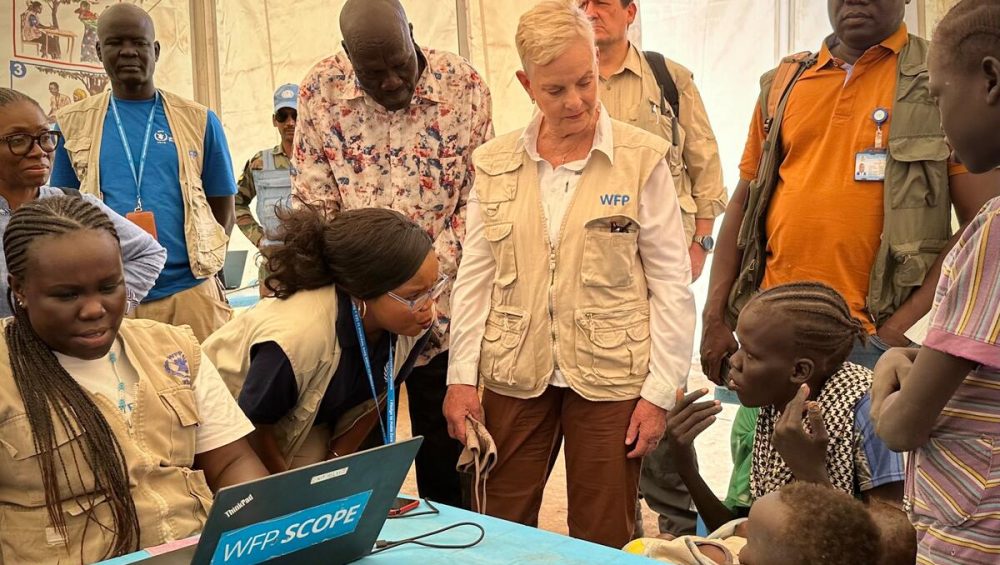
WFP executive director Cindy McCain, wrapping up a somber visit to South Sudan, provided a detailed account of the dire situation. She spoke of the “relentless violence” persisting for over ten grueling months, rendering aid workers impotent in reaching 90 percent of those facing “emergency levels of hunger.”
“I met mothers and children who have fled for their lives not once, but multiple times, and now hunger is closing in on them,” said the Executive Director McCain, as quoted in a press statement posted by WFP last week.
“The consequences of inaction go far beyond a mother unable to feed her child and will shape the region for years to come. Today I am making an urgent plea for the fighting to stop, and that all humanitarian agencies must be allowed to do their life-saving work,” She added.
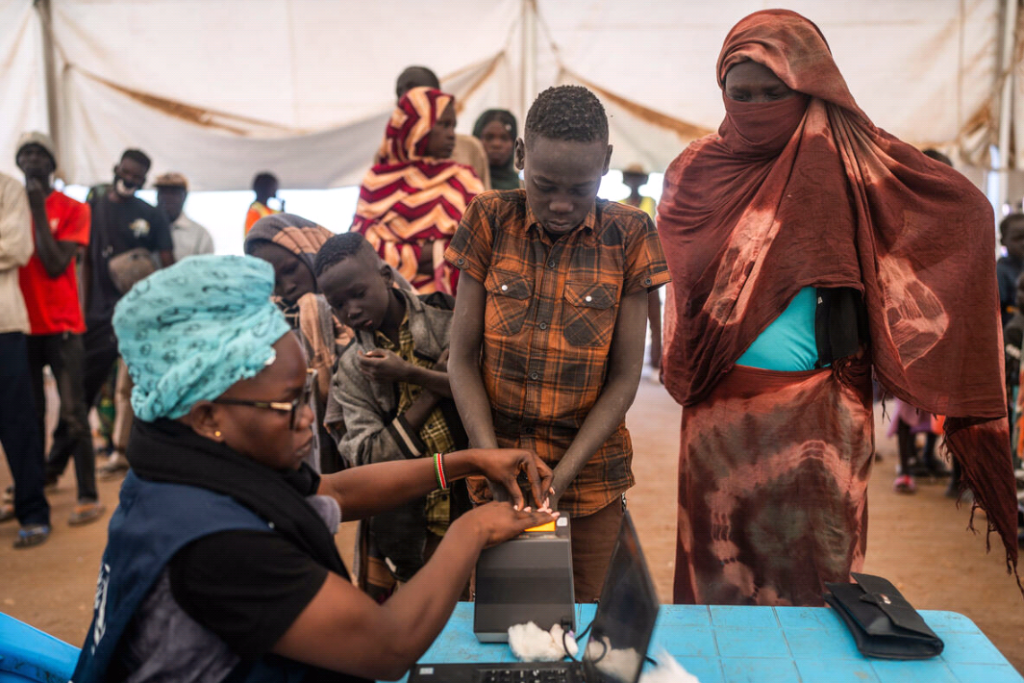
The humanitarian response, already stretched to its limits, is now on the verge of collapse. The entire civilian population in Sudan is on the verge of disaster.
Crowded transit camps in South Sudan tell a heart-wrenching tale, with nearly 600,000 people fleeing from the horrors of Sudan. Families, hungry, fatigued, devastated, defeated and disappointed arrive at these makeshift havens only to be met with more hunger.
Shockingly, recent statistics from IPC reveal that one in five children crossing the border is malnourished, an agonizing testament to the severity of the unfolding catastrophe.
The genesis of Sudan’s civil war in April 2023, pitting army chief Abdel Fattah al-Burhan against his former deputy Mohamed Hamdan Dagalo, also known as “Hemedti” has left an indelible mark of devastation.
Tens of thousands of lives lost, infrastructure razed to the ground, and Sudan’s economy crippled, the conflict has uprooted over eight million people, solidifying Sudan’s status as the epicenter of the world’s largest displacement crisis.
Both the paramilitary Rapid Support Forces (RSF) and the Sudanese army stand accused of indiscriminate shelling of residential areas, deliberately targeting civilians, and obstructing essential aid, plunging the nation into an abyss of despair. However, both sides blame each other for the hell that is going on.
The WFP’s stark warning emphasizes that the humanitarian response is not just strained but is at an ominous “breaking point.”
“Millions of lives and the peace and stability of an entire region are at stake,” emphasizes Cindy McCain, drawing parallels to the global response to Sudan’s Darfur state famine two decades ago. Yet, this time, she laments, the plight of Sudan’s people seems to have faded from the collective memory of the world.
In a glimmer of hope tinged with skepticism, Sudan’s government reluctantly concedes the severity of the crisis, stating, for the first time, a willingness to accept humanitarian aid via Chad and South Sudan, both countries also struggling with an impoverished populace.
However, the WFP underscores that only a complete cessation of hostilities and the establishment of lasting peace can forestall an impending catastrophe.
As the international community watches, Sudan teeters on the brink of an abyss, the echoes of forgotten suffering growing louder, and the hunger crisis threatening to cast a long, haunting shadow over the collective conscience of the world.