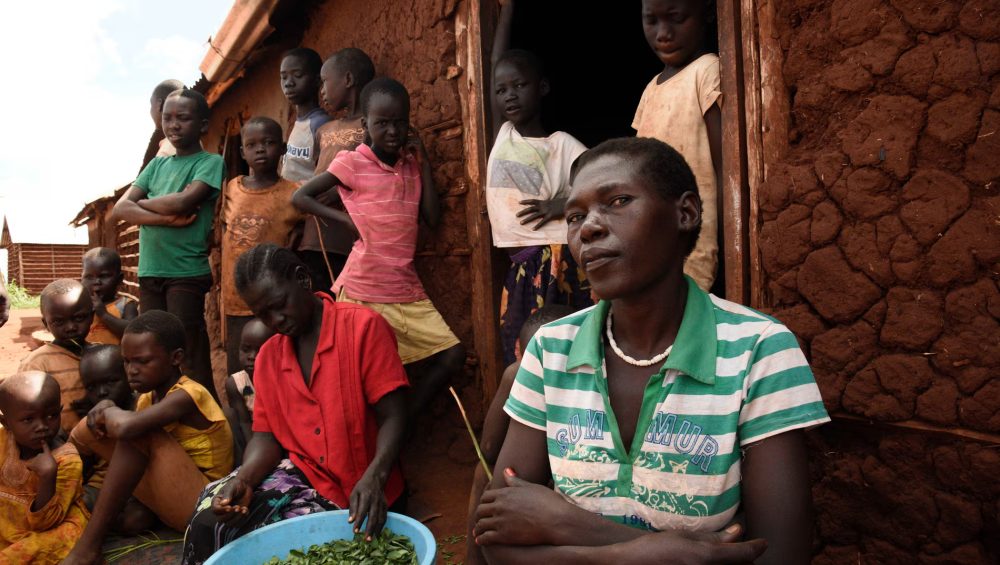
In Kiryandongo Refugee Settlement, Uganda, women and men are reshaping traditional roles, proving that household chores and income generation are responsibilities to be shared rather than assigned by gender.
For centuries, gender roles have been deeply ingrained in society, with men and women assigned specific responsibilities that were rarely questioned. However, societal development, changing family structures, and evolving lifestyles have begun to challenge these norms.
In Kiryandongo Refugee Settlement, Uganda, women and men are reshaping traditional roles, proving that household chores and income generation are responsibilities to be shared rather than assigned by gender.
For 24-year-old Atim Joy, a South Sudanese refugee, household chores are not a burden but a privilege. Living with her six-year-old son, Malish, and her brother, Raymond, she has embraced a balanced approach to domestic responsibilities. Their household operates on teamwork, where duties are shared equally.
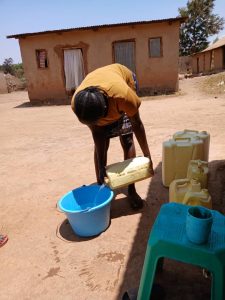
Each morning, Atim wakes up at 6am to prepare Malish for school. He attends St. Bhakita Nursery and Primary School, a short walk from their home. After dropping him off, Atim heads to “Molokony” market, where she runs a vegetable stall selling cabbages, sukuma wiki, onions, and tomatoes. She has been in this business for the past year, following a stint at a café that she left due to low wages.
However, running a vegetable stall comes with its own challenges. Some days, she makes no sales, and her produce goes bad, leading to losses. Despite this, she remains hopeful and determined.
Back at home, her brother Raymond takes charge of cooking lunch. Unlike the traditional belief that kitchen duties are solely for women, Raymond believes in shared responsibilities.
“My sister is not a slave; she is a human being like me. I do house chores with her because one day, if she is not around, I will have to fend for myself,” he says.
Raymond also does casual work in the community to supplement their family income.
In the refugee settlement, opinions on gender roles vary. The Molokony market, where Atim sells her vegetables, is predominantly occupied by women vendors.
When asked about their views, many women mentioned that they sell vegetables to support their households, while their husbands engage in casual jobs such as construction, farming, and selling vehicle spare parts. However, some women emphasized that such work should not be limited to men, as they, too, can take on similar roles.
Raising the next generation differently
Atim and Raymond are setting an example for Malish, teaching him basic household chores from an early age. At just six years old, Malish helps sweep the compound, washes dishes, and insists on washing his own school uniform.
Speaking about his chores, he says, “Our teacher tells us to be good children and help our parents at home. I sweep our compound, bring drinking water for my mother, and pray to God to protect us.”
Their approach challenges the notion that household duties are exclusively for women and demonstrates the importance of raising children to be responsible, regardless of gender.
Balancing career and Family
Acen Esther,a secondary school teacher of Geography and History at Panyadoli Secondary School, represents the small percentage of women in the camp who juggle both home duties and professional careers. A mother of three, including an infant and two children in nursery and primary school.Acen faces the daily challenge of balancing work and family responsibilities.
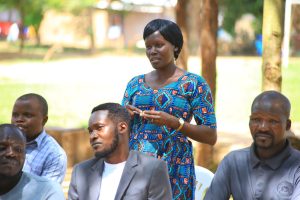
Before becoming a teacher, she had more time for her children, but her new job added significant demands to her schedule.
“On several occasions, I arrived late to class. At some point, I had to request a colleague to cover my lessons so I could manage my morning duties at home,” she explains.

The challenge of balancing work and home responsibilities has strained many marriages in the settlement. Locals in Kiryandongo Settlement camp have asserted that many relationships have broken down due to couples failing to compromise on roles and responsibilities.
However, Acen found ways to manage her duties as a wife, mother, and career woman. With her husband working in a distant location, she takes full responsibility for her household while maintaining her job.
“Some people suggest that I quit my job and focus on home duties, but I can’t. I need the income to support my husband and my siblings. It’s all about hard work and sacrifices,” she says.
The role of community organizations in gender sensitisation
Recognizing the importance of shared responsibilities, local NGOs and community-based organizations (CBOs) in Kiryandongo Refugee Settlement have conducted several awareness campaigns promoting gender equality.
On March 8, 2025, during International Women’s Day celebrations, Kiryandongo Video Advocates, a CBO in the camp, emphasized the importance of digital tools in empowering women. Their advocacy focused on achieving gender balance in work distribution at home and in the workplace.
According to a press release by UNHCR, the UN Refugee Agency, and the United Nations Entity for Gender Equality and Empowerment of Women (UN Women) in partnership with the Government of Uganda, ALIGHT, Care International, the Danish Refugee Council, International Rescue Committee, OXFAM, Over Comers Women Group and Transcultural Psychosocial Organization, economic hardships and loss of household income have contributed to gender-based violence (GBV), forcing some women into negative coping mechanisms like survival sex and alcohol sales to make ends meet.
A UNHCR report titled, “Inter-Agency Rapid Gender Analysis – COVID-19 (December 2020)”, highlighted similar findings.
To address challenges of violence in households, Kiryandongo Video Advocates conduct film screenings showcasing gender roles and responsibilities. These screenings serve as platforms for community discussions, helping men and women understand the benefits of shared responsibilities.
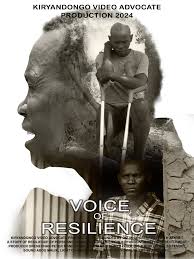
According to Alhaji Ahmed, the media and communication officer for Kiryandongo Video Advocates, the media plays a crucial role in promoting gender equality. “Sharing responsibilities at home fosters equality and collaboration, leading to development,” he says.
The stories of Atim, Raymond, Esther, and Malish reflect a growing shift in gender roles within the Kiryandongo Refugee Settlement. While challenges persist, many families are embracing shared responsibilities, proving that gender does not define one’s role in the household or society.
For women like Acen, balancing career and family life is not easy, but with proper planning and a supportive environment, it is possible. As she puts it, “It’s all about hard work, determination, and wanting the best for your family.”
Through education, advocacy, and lived experiences, more people in Kiryandongo Refugee Settlement are learning that gender equality begins at home. And with continued efforts from individuals and organizations, a more balanced future is within reach.