To write objectively about yourself is a thing you can convince only yourself, because every other time you had a wrong opinion about someone or something else, it made sense to you – it was right in your sense. And such is the dilemma of any person “out of their country” – the suspension of a sense of what is right and wrong – and the danger of trying to understand and pass judgment on what is happening around you based on your previous experiences.
I arrived in South Africa some time ago, landing at Cape Town International airport with my ears exhausted from the engine ramblings of the plane. Cape Town International airport is an over-blown building, the longest airport in length on the African soil and the so acclaimed best in ranking.
When you enter inside, the thousands of last-minute travellers swinging at high speeds to catch their flights give you a picture of a super-structured place, this picture demonstrating the years of a history that made this place a high-ranking airport – a history shared by the entire nation.
From the airport, you can discern that it is possible for the busying face never to remember the faces of their neighbours, that they might be a little too busy with themselves and often forget what their neighbours do. They may do this subconsciously because that is their daily life; waking up to mind their business is their business.
South Africa is an aggregated individualist state, the busying faces at the airport helping to portray the self-caring attitude of all citizens. When I use the word self-caring, I am intent on not using selfish, because that is what those that deem capitalism in less regard would call it. But to speak of a capitalistic society, South African breathes full into the syllables – at least ranking highest on the African continent.
The one thing you’re sure to discern from those busying faces is the cultural machine that has given way to these characters – a multi-cultural legacy that the nation holds. From the white South Africans, with a long thread of descent that stretches into the Dutch of current day Germany and Netherlands, and those that are connected to the English people of the United Kingdom, to the coloured people, an intersection of different races, the Indians, with a touch of Hindu genealogy; and the verse, specially aware peoples of the early African Kingdoms seated at the bottom of the African continent – the Xhosa, the Zulu, South Africa is a land of all in one. A rainbow nation indeed.
My Uber driver from the airport to the Southern suburbs where I live was Zimbabwean, his demeanour- the often found of his like – fortunate young black Africans with a regular income earning activity – who were able to escape the pains of their home countries in search for an income in the multi-cultural cities of this nation. But good as it may be for their pockets; this upsurge of foreign migrants to the nation has caused a tapestry of irreconcilable realities.
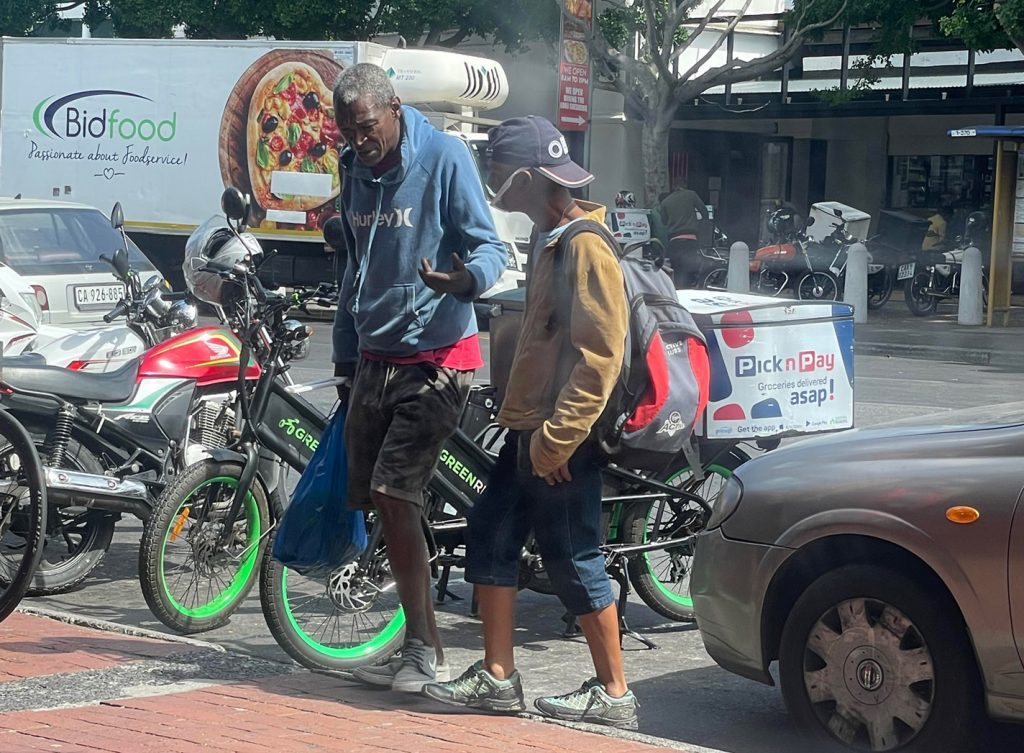
Every day I move out to the streets to buy a few items on my grocery list, I interact with more than 5 individuals that ask me for not more than a dollar in local currency. Many of them are coloured.
Their tone is often normal like street-begging is all they have been doing. And they have an instinct for understanding you are a foreigner. Their assumption is picked by your accent, or when you give money to one of them – unfortunately, it seems it’s not common for citizens to give them what they ask for. In Uganda where I have grown up, street-begging is often not for everyone. A few kids from marginalized communities might be seen on the streets, individual suffering from fatal diseases, birth anomalies, may sit across the streets with a small basket and a passerby may throw a few shillings in the basket without them asking.
In South Africa’s vibrant multi-cultural Cape Town, the young and energetic are running to strangers begging for money, the old and poor are moving with their kids on streets borrowing from anyone that is passing around. The other day I branched to the lane that leads to my address, and a middle-aged man stopped me. He had a little girl by his back, aged about 7. He told me he wanted to sell to me a golden ring, which he pulled out, and said he wanted only R500.
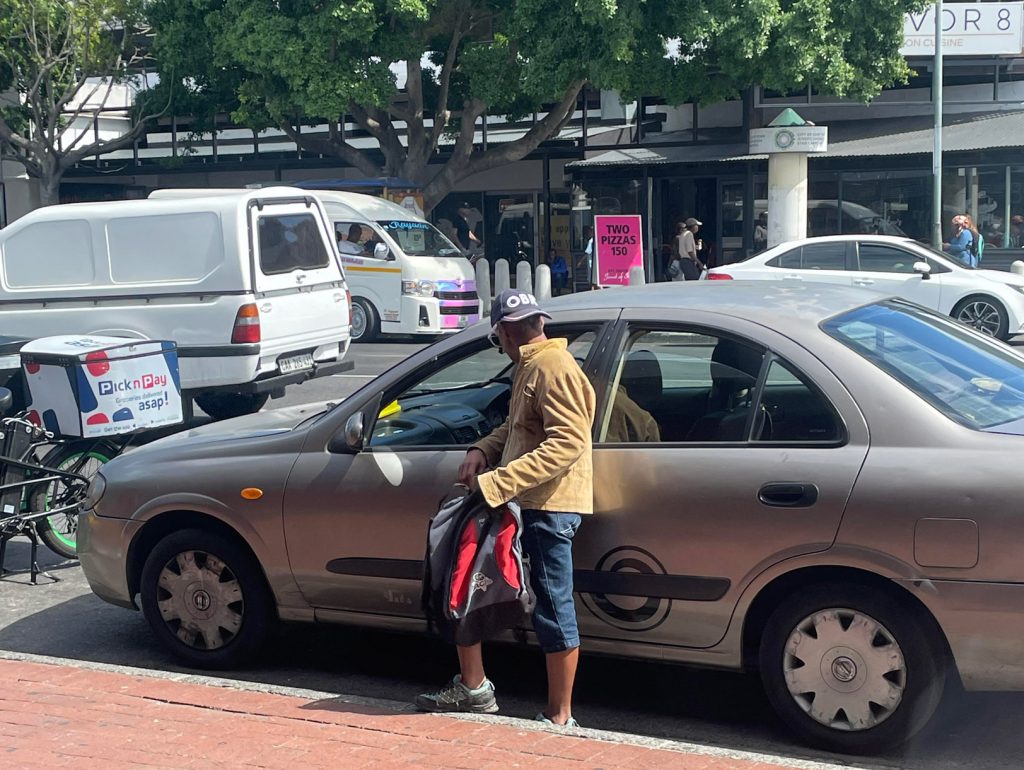
I told him I didn’t have the money, and he told me I could give him any amount in the pocket. When I insisted that I had nothing in the pocket, he told me we could go to my place and pick the money. He was tired and weary, his daughter a pale-faced girl looking like an under-fed kitten. So then it is explainable, that when the mood of those individuals at the airport is unlike, unfriendly, uncharacterized – many of them from middle class families, inward-grown – the straightest thing that illustrates their behaviour is a need for protection. Because whatever experiences lead a middle-aged man to be in possession of a golden ring whose source is demanding to reveal; might appropriately lead anyone to feel a purge of insecurity. And if it might be common that the more strangers you give your time, the more the risk of running into some rogue thugs capable of breaking into a private property and stealing luxury items, then personal pre-possession and minding personal business might be understandable.
As a foreigner therefore, it might be unusual that a society normalizes such individuality, that it normalizes the objectifying picture of rich in high end cars and poor in dirty clothes all on the same streets; but then you are simply a foreigner. The price for you as a foreigner is that you will be held by the street-beggars in the same regard – a self-caring rich breed enjoying the fruits of a poorly settled society. And when you do give some small money to them, they will want to find out where you sleep so they can sell to you a golden ring tomorrow or request for more money, and they will do this with something else – an undertone of a hatred that might be implicit but indicated – a hatred they share against any other individual not of their like. Xenophobic! We have had the term in newspapers, nationals in South Africa hating a Zimbabwean driver in an Uber for taking the job that they might have taken. Nationals hating an African student for occupying space in a class they might have occupied. For all the country’s experiences and choices, you may understand why this happens. And like all other societies we come from, this seems to be a blemish on the rainbow nation South Africa – a blemish that has been pulled up more often, one that continues to shape public discourses on governance and policies, and one that much more influence how the electorate votes. As for me, I have experienced in it fits and starts, from small conversations, from the look of people’s faces, from the supermarket attendants selling groceries, to those I have given a few rands.
Ambrose Ngobi, Scholar, University of Cape Town.