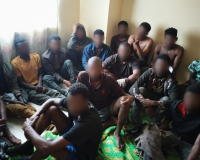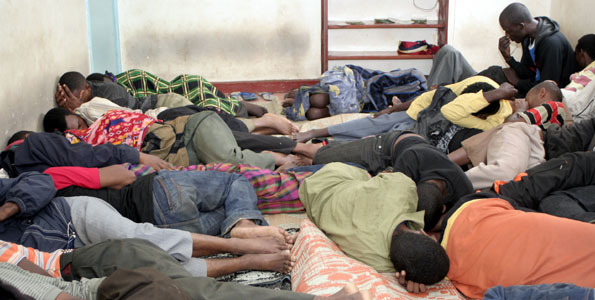
An investigation by Africa Uncensored has revealed that hundreds of Kenyans and Ugandans have been trafficked into forced labour in Southeast Asia, particularly Myanmar and Cambodia, where they are trapped in cyber‑scam compounds. Victims were promised legitimate jobs, only to have their passports confiscated and be subjected to violence, debt bondage, and isolation. Governments in Nairobi and Kampala are now under pressure to act as families demand accountability.
The promise of well‑paying jobs abroad has turned into a nightmare for many East Africans. Africa Uncensored’s documentary Slaves for Sale exposes how Kenyans and Ugandans are being trafficked into Southeast Asia’s cyber‑scam industry, with Myanmar emerging as a key destination. Victims are recruited through social media adverts and informal agents, lured with offers of tech and service jobs. Once they arrive, their passports are seized, and they are forced into online fraud operations under armed guard. Survivors describe working up to 16 hours a day, facing beatings for disobedience, and living in compounds surrounded by barbed wire.
The scale of the crisis is alarming. Prime Cabinet Secretary Musalia Mudavadi recently told Parliament that 751 Kenyans have been rescued from Myanmar between 2022 and 2026, while Cambodia recorded 393 rescue cases in just four months this year. He identified Southeast Asia, Russia, Gulf nations, and North Africa as hotspots where Kenyans are most vulnerable to trafficking.
Ugandans face similar risks. Africa Uncensored documented cases of Ugandan nationals trafficked alongside Kenyans into scam centres in Myanmar, Cambodia, and Laos. Families back home often lose contact for months, only learning of their relatives’ plight through leaked videos or survivor testimonies.
The human toll is devastating. Reuters reported that over 600 Kenyans trapped in Cambodia petitioned the High Court in Nairobi for urgent repatriation, citing torture, slavery, and untreated injuries. They were rescued by Cambodian authorities but lacked funds to return home, forcing them to seek government intervention.
Governments are now under pressure. Kenya’s Ministry of Foreign and Diaspora Affairs has been criticised for slow response, while Uganda faces calls to regulate recruitment agencies more strictly. Civil society organisations argue that awareness campaigns are urgently needed to warn job seekers about fraudulent offers.
International bodies are also sounding the alarm. The International Organization for Migration (IOM) warns that cyber‑scam trafficking is a growing phenomenon, with East Africans increasingly targeted due to high unemployment and weak regulation. Human rights groups are urging Southeast Asian governments to dismantle scam compounds and allow repatriation of trafficked workers.
Migration dreams are being weaponised by criminal networks, turning young East Africans into commodities. The challenge now is not only rescuing victims but building safer migration pathways—through stronger regulation, regional cooperation, and global accountability—to ensure that desperation does not lead to slavery.
Sources: Africa Uncensored (Slaves for Sale), FlashNews (Mudavadi report), Reuters/US News (Cambodia trafficking case).