This comes days after former Prime Minister Raila Odinga called for an Inter-generational Conclave geared towards dialogue, during a press briefing on the Saba Saba day held at Serena Hotel on July 7, 2025.
Experts and observers have raised concern that escalating conflict, especially when it intersects with heavy-handed state response, could again trigger displacement—particularly for young people living in informal settlements, urban migrants, and marginalized communities with limited access to legal protection.
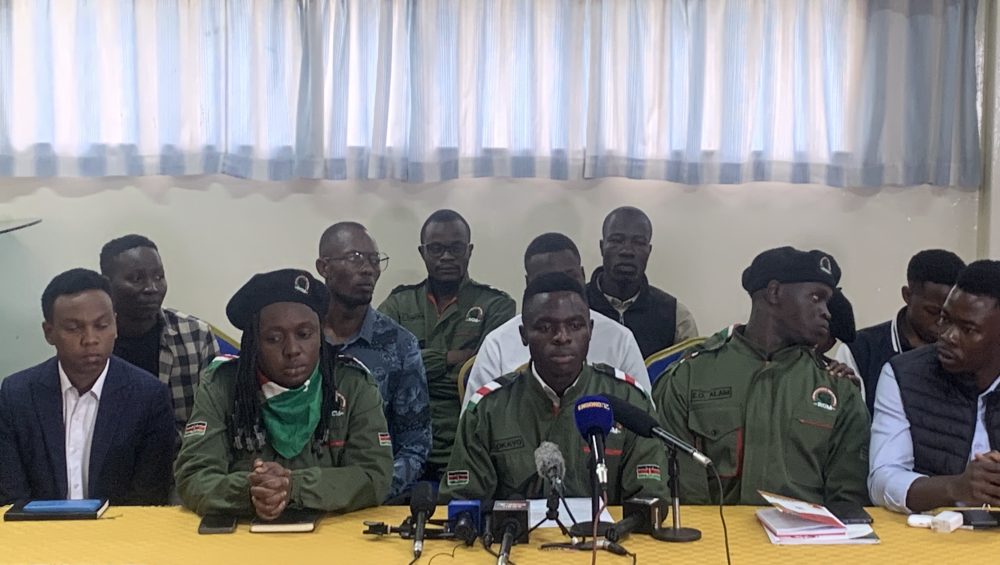
Kenya’s Revolutionary Gen Z Movement (RGM) today held a press conference in Nairobi, announcing plans to continue anti-government protests through both physical and digital platforms. The youth-led movement said it is reorganizing, with a sharper focus on structure, accountability, and civic inclusion, as frustrations mount over what they termed- police brutality, corruption, and lack of institutional response.
The movement said their petitions to various state institutions, including Parliament, have been ignored, prompting a shift in tactics. Protesters will now rely more heavily on online mobilization, digital advocacy, and decentralized grassroots action, while maintaining their constitutional right to peaceful assembly.
At the heart of their grievances are calls for justice and reforms. Ochieng Alam, speaking on behalf of the movement, outlined a list of demands, among them:
- The unconditional release of all arrested protesters, citing the right to peaceful assembly under Article 37 of the Kenyan Constitution.
- An end to police brutality, which RGM says has been systematically used to suppress dissent.
- A united front among Gen Z youth across the country, cutting across class, ethnic, and regional lines.
- Zero tolerance for corruption, which the movement links directly to systemic inequality and rising poverty.
- Broader structural reforms, including civic inclusion and protection of fundamental freedoms.
While the movement remains non-partisan and leaderless by design, it has begun coordinating through a more organized structure to avoid co-optation and internal fragmentation. The Nairobi briefing comes amid renewed national debate over governance, youth participation, and the risks of unrest escalating into broader crises.
369d7edd-3fad-487c-b306-d0c8393ded8c
Uniforms With a Message
In an exclusive interview with Migrant Narratives Africa, RGM representative Joshua Okayo clarified the meaning behind the now-iconic green overalls worn by members of the movement.
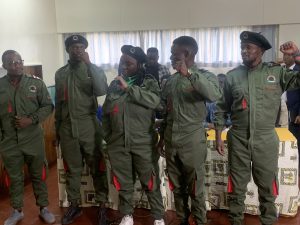
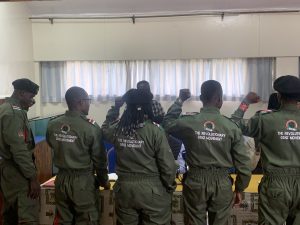
“The green overall represents work. We are working, rolling up our sleeves and getting to the ground. Green represents our land, food security. With food security, everyone can smile, life is affordable. We are also representing ecological justice,” Okayo explained.
He added that the Kenyan flag colors on the uniform represent patriotism, while the clenched fist symbolizes resistance to oppression, tyranny, and authoritarianism. The many pockets sewn into the design represent practical readiness—for carrying smartphones, newspapers, the Bible or Qur’an—tools of awareness and resilience.
Okayo also clarified that the uniform is not copied from any Kenyan security agency or official uniform. “It is our own expression,” he said.
Blood Donation Drive
The movement also used the platform to announce a nationwide blood donation drive scheduled for July 19, 2025, at Kenyatta National Hospital, in support of Gen Z protesters currently hospitalized due to injuries sustained during recent demonstrations.
The appeal follows weeks of violent confrontations between police and demonstrators across the country, where dozens have been injured, some fatally.
Failed Dialogue and a Shift in Strategy
RGM expressed skepticism toward state-led dialogue efforts, including those recently proposed by former Prime Minister Raila Odinga called for an Intergenerational Conclave geared towards dialogue, during a press briefing on the Saba Saba day held at Serena Hotel on July 7, 2025.

Despite such appeals, the Gen Z movement remains unconvinced.
They argue that past attempts at dialogue, including formal petitions and stakeholder engagement, have not resulted in meaningful change. As such, RGM says it will pursue its objectives through peaceful protest, online mobilization, and community organizing.
“We’ve tried the official routes. They failed us. We’re not retreating—we’re restructuring,” one statement read.
Risk of Displacement Amid Escalating Tensions
The events unfolding across Kenya carry echoes of past national crises. During the 2007–2008 post-election violence, political unrest led to the internal displacement of over 600,000 Kenyans. That period of turmoil was fueled by a mix of political failure, ethnic division, and unchecked violence—conditions that many now warn could re-emerge if today’s grievances remain unaddressed.
Experts and observers have raised concern that escalating conflict, especially when it intersects with heavy-handed state response, could again trigger displacement—particularly for young people living in informal settlements, urban migrants, and marginalized communities with limited access to legal protection.
Examples from other African countries offer a stark warning. In South Sudan, contested elections and unresolved grievances led to civil war and the displacement of over 4 million people. In Sudan, youth-led protests in 2019 led to a government collapse, but the military crackdown that followed sent hundreds of thousands fleeing. In Ethiopia, unresolved internal tensions have led to mass displacement in Tigray and other regions.
Kenya now stands at a similar crossroads.
RGM says its push is not just for political reform but to prevent the kinds of breakdowns that have left generations of Africans without homes, identities, or justice.
A Movement Rooted in Identity and Inclusion
While leaderless, RGM has evolved from a loose digital collective into a movement with shared goals, civic rituals, and visual identity. The green uniform, the structured press briefing, and the blood drive all point to a protest culture that is organized and intentional.
For many young people in Nairobi’s Eastlands, Kibera, and informal settlements across the country, the Gen Z protests are the first time they have seen their daily struggles publicly validated.
The movement is also deeply intertwined with digital organizing. From TikTok to X (formerly Twitter), Gen Z has used social media to share information, organize protests, and call for accountability. This digital fluency has allowed them to bypass mainstream media filters and assert their own narratives, particularly in a space where migrant and informal voices are often erased.
Conclusion
At today’s press briefing, RGM did not promise quick fixes. Instead, it pledged long-term commitment to civic resistance, constitutional education, and strategic pressure. The group warned that if systemic injustice continues unchecked, the consequences could go far beyond protest deaths and economic strain—paving the way for the kind of instability that has torn apart other nations.
Kenya’s youth are demanding to be seen and heard—not as future leaders, but as present citizens. Whether the state listens may determine not just the future of the country’s democracy, but the security and belonging of millions, including migrant communities living at the margins.