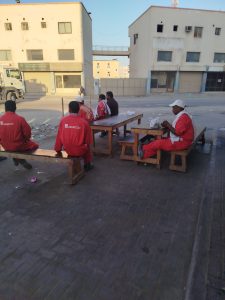
A small country with a big problem. Eighty-two percent of expatriate workers in Bahrain are in jobs avoided by locals. Official figures show that 72 percent of these workers earn less than 200 Bahraini dinars (BD) a month, though in reality wages can fall as low as 60 BD. Most of those at the bottom of this chain are unskilled migrant labourers from far-flung parts of South Asia and Africa. For many, the promise of opportunity abroad quickly turns into a cycle of exploitation.
Manama, Bahrain.
With no minimum wage law for foreign workers, Bahrain has become a hotbed of abuse. Companies exploit the legal vacuum, seizing the opportunity to cut costs and increase profits in dubious ways. Corners are cut, contracts are altered, and workers are left vulnerable in a system tilted against them.
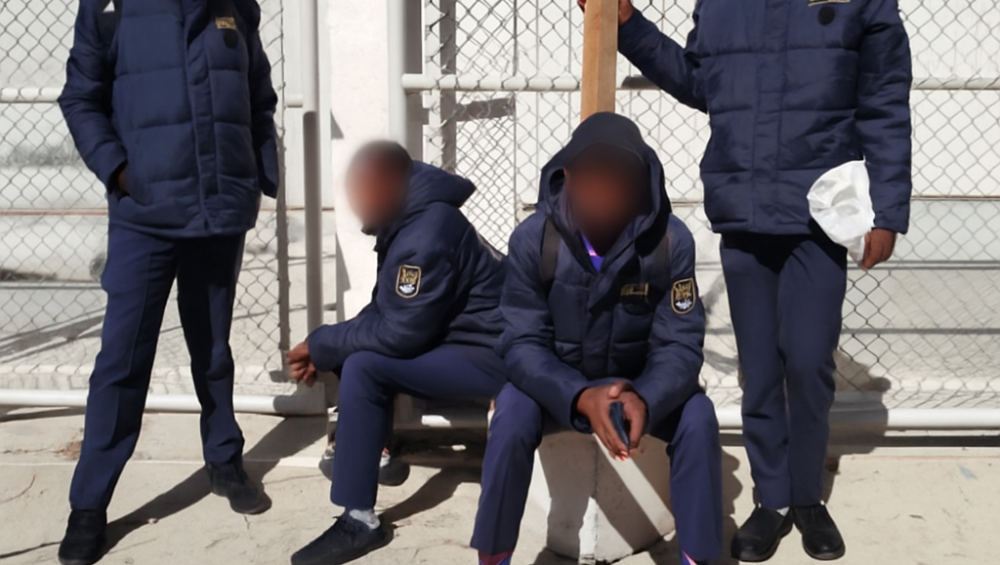
Among those caught in this web are Kenyans, many of whom left their rural homes with dreams of financial security. In 2025, a group of 10 Kenyans arrived in Bahrain to work as security guards. They were recruited by agents in Nairobi who promised steady salaries, decent housing, and better prospects. Instead, they found themselves in a system where contracts were switched, wages slashed, and labour protections non-existent.
From Siaya to Manama: chasing a promise
Most of the Kenyans who travel to the Gulf do not come from Nairobi or other big cities. They are from semi-rural towns where jobs are scarce and opportunities limited. For them, a flight out of Kenya is often celebrated as a life-changing moment. Families gather to send off their sons and daughters, prayers are held, and neighbours cheer them on. The expectation is simple: their child will return with savings, and life will be better.
That was the hope when 10 Kenyans signed contracts in Nairobi promising them 92 BD (about KSh 35,000) per month for 12-hour shifts, with one day off each month and renewable two-year terms. It was not much, but it was steady. They boarded a budget airline, connected through Sharjah, and landed in Bahrain just before dawn. The bright city lights filled them with excitement. They took photos, called their families, and believed their journey to success had begun.
But within days, reality set in. After routine medical checks and being fitted for uniforms, the workers were summoned to company headquarters. Their phones were confiscated, and they were asked to sign new contracts without reading them. When some resisted, company officials insisted it was a “formality.” None were given copies. Later, they would discover the documents registered with the Labour Market Regulatory Authority (LMRA) bore little resemblance to what they had signed in Kenya.
Locked into unfair terms
The Kenyans were employed under Eagle Security and its subsidiary White Falcon Security — essentially the same company, owned by a Pakistani national, but split to skirt Bahrain’s legal cap of 500 employees per firm. Together, the companies employed around 650 workers, including hundreds from Africa and South Asia.
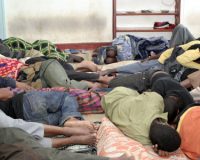
The accommodation provided in Tubli, Hidd, and Sitra was overcrowded, with no cooking facilities. During Ramadan, workers were told to eat at mosques where free meals were available. Work began almost immediately. Some guards were forced into shifts as long as 52 consecutive hours. Others reported that pay was delayed or handed out in cash, in violation of wage protection rules requiring bank transfers.
It soon became clear why their phones had been confiscated during orientation: the company wanted to prevent them from recording or sharing evidence of what was happening.
Kenyan workers speak out
For some, the reality was too much to bear. Within three months, five of the 10 Kenyans had returned home, leaving behind unpaid debts to recruitment agents. The remaining five stayed on, determined to complete their contracts despite the conditions.
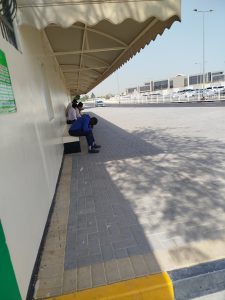
Francis Kariithi, 30, said he was promised 150 BD per month. “When I arrived, my contract showed a basic salary of 45 BD, plus allowances bringing it to 110 BD. It was a huge difference. I argued with the company, but nothing changed. I left after three months. My family had to fund my flight home. I realised I could not survive like this.”
Others decided to endure. Peter Maina, 25, stayed because his wife was also working in Bahrain. “From the little I get, we can at least manage together. I don’t have to send much money home, only upkeep for my child in Kenya,” he said.
John, 33, tried to fight back. He lodged a complaint at LMRA but was told he could either return home or take his case to the police. No action was taken against the company. In retaliation, his employer transferred him between posts, including at LMRA headquarters, where he worked 14-hour shifts for just 92 BD a month. Eventually, a rights group paid for his ticket home.
Another Kenyan, Kalimbo Teya, 41, recalled going 45 days without pay. “We survived on aid food packages. I had many responsibilities back home. I realised the longer I stayed, the worse it would get, so I left,” he said.
Others spoke of collapsing from hunger, being denied medical care, or facing racism in their postings. One worker said a female colleague fainted while on duty because she had not eaten. When another was hospitalised, she had to wait 15 hours before the company settled her bill, which was later deducted from her salary.
A broken system
The plight of the Kenyans is not unique. Bahrain’s private sector employs around 350,000 foreign workers, mostly in low-paying jobs. Many arrive with signed offer letters guaranteeing certain wages, only to discover on arrival that their contracts have been altered. Without a minimum wage law for migrants, companies can legally pay them far less than Bahraini nationals doing the same work.
This disparity is glaring. Bahraini citizens working for White Falcon earn around 300 BD per month, enjoy medical insurance, and work eight-hour shifts with regular days off. Their expatriate colleagues earn less than half that amount, work longer hours, and receive no such benefits.
The LMRA has conducted sting operations against undocumented workers, but critics say it does little to address systemic exploitation. Labour violations continue openly, with companies shielded by weak oversight and a lack of accountability.
The courage to say no
What sets this group of Kenyans apart is that half of them chose to walk away, even at great personal cost. They lost recruitment fees, endured humiliation, and returned home empty-handed. But in doing so, they demonstrated an awareness and courage that many migrants feel but cannot always act upon.

Those who remained embody a different kind of resilience — enduring hardship in the hope of better opportunities ahead. Some say they will look for new jobs once their contracts expire. Others cling to the belief that patience will eventually pay off.
Both choices reflect the difficult realities faced by migrants across the Gulf: stay and suffer, or leave and start again. Neither is easy.
Beyond Bahrain
The Kenyans’ experience mirrors wider trends in the region, where migrant workers are essential to national economies but remain excluded from labour protections. In Qatar and the UAE, reforms have been introduced after international pressure, but implementation remains uneven. In Bahrain, progress has been even slower.
Without stronger laws and enforcement, the cycle of exploitation will continue. For African migrants, who are increasingly joining South Asians in the Gulf workforce, the risks are growing.
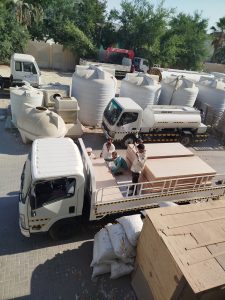
As Francis put it before leaving Bahrain: “We only wanted a chance to work and support our families. Instead, we found ourselves trapped. I left because I realised my dignity mattered more than a job.”
The unfinished fight
The story of these 10 Kenyans — half who left, half who stayed — is a reminder of the human cost of weak labour protections. It highlights not only the courage required to speak up, but also the structural changes needed to protect migrant workers.
Until laws are enforced, recruitment practices cleaned up, and minimum wages extended to all, migrants in Bahrain and across the Gulf will continue to carry the burden of broken promises.
For now, their voices are the only safeguard: testimonies of workers who said no, who endured, and who remind us that behind every remittance sent home lies a struggle often invisible to the world.